A sharp deterioration in the economic situation caused by the conflict in the Middle East has forced the Catalan authorities to implement sweeping support measures. At the upcoming Consell Executiu meeting, the first aid package worth 400 million euros is set to be approved. This decision aims to protect residents’ incomes and maintain stability in the region’s key economic sectors. According to El Pais, officials expect these steps to soften the impact of the external crisis on Catalan families and businesses.
The plan includes direct payments, tax breaks, and special loans for families to offset rising costs of food and energy. Separate support measures are set for companies, particularly in transport, agriculture, and fisheries. All business payments will be contingent on preserving jobs. In addition, authorities intend to accelerate the transition to renewable energy sources to reduce dependence on external factors.
Responding to new challenges
The introduction of this emergency package is a reaction to the instability brought about by military actions in the region. In recent weeks, Catalonia’s leadership actively discussed possible scenarios with parliamentary factions, trade unions, and employers. As El Pais notes, these measures will complement initiatives being developed by the European Union and Spain’s central government.
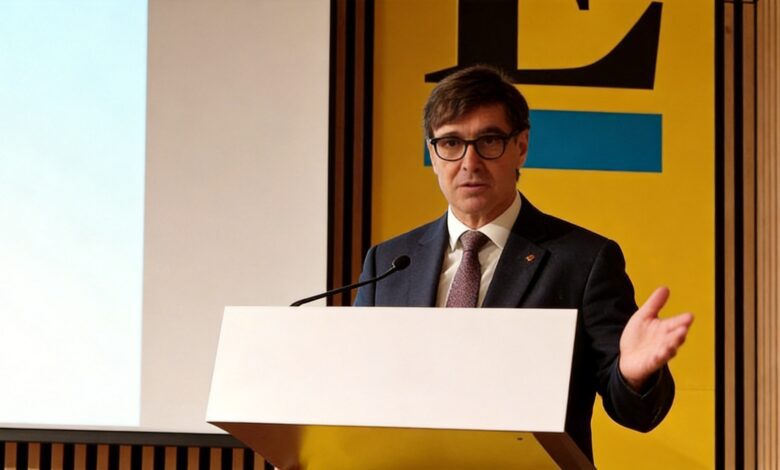
Authorities emphasize that now is not the time for political disputes or efforts to benefit from the crisis. Catalonia President Salvador Illa has called for unity and responsibility, not only from politicians but also from major companies and financial institutions. He reminded that in times of instability, it is important to act in the public interest rather than pursue excessive profits.
Economy and social stability
The main task of the government is to prevent a decline in living standards and an increase in social tension. This requires coordinated action at all levels—from local authorities to European institutions. Salvador Illa believes that only joint efforts will protect Catalonia’s economy and ensure resilience in the face of external shocks.
Authorities explain the need for intervention by saying that market mechanisms function unpredictably during a crisis. This is why the state takes responsibility for protecting both citizens and businesses. A similar approach applies to the issue of affordable housing, where the government also actively intervenes to stabilize the situation.
International context
Amid escalating conflict in Iran and displays of military power by the US and Israel, Catalan authorities are closely monitoring developments. Salvador Illa noted that Western actions might be interpreted ambiguously, and the response of the European Union and Spain’s central government deserves approval. According to El Pais, the Catalan government supports de-escalation and expects the situation to stabilize soon.
In recent years, Spain has already faced the need for emergency economic support measures. For example, during the COVID-19 pandemic and the 2022 energy crisis, authorities implemented similar assistance packages for citizens and businesses. Those measures included subsidies, tax relief, and support for the most vulnerable sectors. Past experience shows that timely intervention helps mitigate the effects of external shocks and maintain social stability.