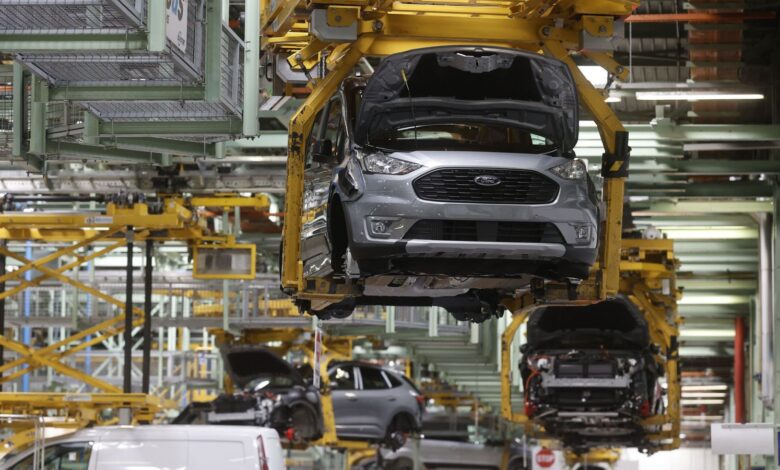
The potential entry of a major Chinese electric vehicle manufacturer at the Ford plant in Valencia could be a turning point for the region’s economy. For local residents, it represents an opportunity to preserve jobs and attract new investment, which is especially important amid changes in the European automotive industry. According to El Confidencial, the negotiations between Ford and Geely may shift the market balance and impact the future of the entire sector in Spain.
Negotiations and Expectations
Valencia’s regional president, Juanfran Pérez Llorca, expressed cautious optimism regarding Geely’s possible arrival at the Ford plant in Almussafes. He noted that the talks involve private investment, and any official statements should come from the companies themselves. According to him, the region is once again becoming attractive for major investments, as demonstrated by the interest of automakers and other industrial players.
Recently, representatives of the Valencian government visited China to meet with local companies and learn about their plans. At the same time, a Ford delegation traveled to China to discuss joint opportunities, including making use of production facilities in Almussafes. According to El Confidencial, both sides are considering options for sharing manufacturing resources in Europe, which could lead to the launch of new electric vehicle models at the Spanish plant.
Impact on the Region
Geely’s arrival at the Ford plant could become a key factor in preserving jobs and maintaining operations at the facility, which currently produces only one model — the Ford Kuga. The plant has a capacity of up to 400,000 cars a year, but its output has significantly declined in recent years. For Valencia, this is not just an economic issue, but one of social stability, as thousands of families rely on jobs at the plant and related businesses.
Experts note that collaboration with the Chinese manufacturer would help avoid high European tariffs on electric vehicles imported from China. This would allow Geely to enter the EU market without extra costs, while the Ford plant would secure new orders and utilize its capacity. However, negotiations are still at an early stage, and their outcome remains uncertain.
Market and competition
In recent years, Ford has been revising its strategy in Europe, focusing on electric vehicles and partnerships with leading Chinese brands. Besides Geely, the American group is also in talks with companies such as BYD and Xiaomi. However, this involves only manufacturing, with no transfer of autonomous driving technologies or other innovations.
As European regulations tighten and new tariffs are imposed on Chinese vehicles, many manufacturers are seeking ways to localize production within the EU. According to El Confidencial, Renault has already abandoned production of certain models in China to avoid restrictions. Similar steps could set a trend for the entire industry if Ford and Geely successfully reach an agreement.
Context and outlook
In the coming months, new visits from Chinese business representatives are expected in Valencia to discuss the details of potential investments. Regional authorities emphasize that such projects take time, require numerous meetings, and coordination. Despite their cautious statements, the Valencian government is confident: the region is moving in the right direction and could receive good news in the near future.
In recent years, Spain has become increasingly attractive to foreign investors in the automotive industry. For instance, in 2025, Volkswagen began building a battery gigafactory in Sagunto, while Stellantis expanded electric vehicle production in Vigo. These projects have already created new jobs and boosted exports. If negotiations between Ford and Geely prove successful, Valencia could repeat the success of other regions and strengthen its position in the European electric vehicle market.