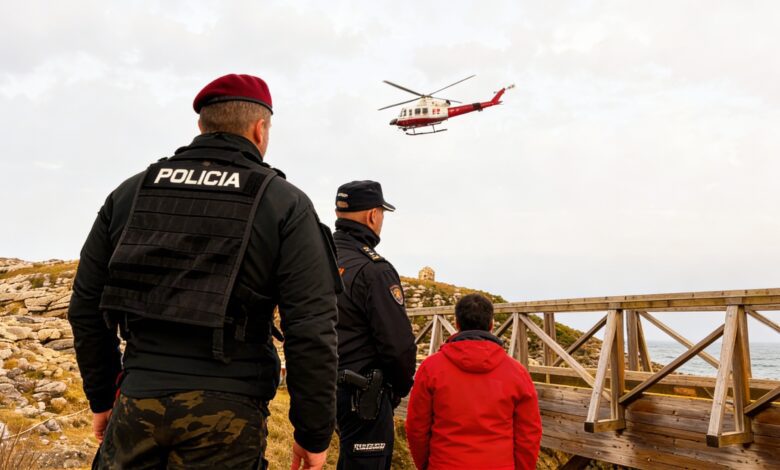
A high-profile investigation into the deaths of six students in Santander has reignited debate over who is responsible for the safety of public facilities in Spain. A court ruling issued in March 2026 may influence how infrastructure is maintained across the country. The spotlight is on a coastal footbridge whose collapse triggered the tragedy and fueled widespread public outcry.
The judge handling the case in the El Bocal area concluded that Demarcación de Costas in Cantabria, under the Ministry for the Ecological Transition, was responsible for monitoring the technical condition of the footbridge. According to El Pais, this agency has been named as the sole entity accountable for maintaining the structure in proper condition. As a result, criminal proceedings have been initiated against two employees: the head of the projects and works department, and the director in charge of the 2012 coastal trail project, who also currently leads the relevant division.
Documents and rulings
The court ruling notes that work to create the pedestrian path, where the ill-fated pasarela was located, was never completed. Documents provided by the central administration and the Santander municipality confirm that the contractor’s contract was terminated back in 2012, and the 2016 project for completion was never approved. The municipality could only take responsibility for maintaining the structure after the official completion of work, which did not occur. This means technical responsibility for the pasarela remained with Costas, even though the site had been open to the public without restrictions since 2014.
The judge also pointed out that in the summer of 2024, maintenance was limited to only the wooden elements, even though a police inspection had identified severe corrosion of the metal parts. Moreover, in May 2024, a security officer reported the poor condition of some wooden components to management, leading to partial repairs that did not fully resolve the problem.
Public reaction
The tragedy sparked a strong response among the residents of Santander. In March 2026, around 500 people took to the streets, demanding that those responsible be held accountable and that similar incidents never happen again. Representatives of civic, environmental, and neighborhood organizations stated that no public facility should be left unattended or fall into a ‘gray zone’ between agencies. Protesters insisted that the deaths of the students must have consequences for the infrastructure management system.
The issue of distributing responsibility among different levels of government in Spain has repeatedly led to court cases. For example, in another high-profile case related to officials’ activities in the real estate sector, a court in Alicante summoned housing service managers to testify regarding the allocation of VPP in an elite district — the details of this case were previously covered.
Context and consequences
As noted by El Pais, the court’s decision in the case of the Santander footbridge could set a precedent for similar cases across the country. In recent years, Spain has seen a rise in incidents where infrastructure sites lacked a clear party responsible for maintenance, resulting in accidents and lawsuits. In 2025, a similar incident involving the collapse of part of a seafront promenade was discussed in Galicia, where a dispute also arose between the municipality and state authorities. In Catalonia in 2024, after a bridge collapse, local authorities tightened oversight of the technical condition of such structures.
Overall, the tragedy in Santander has once again highlighted the need for clear allocation of responsibility among agencies and the importance of regular technical inspections of public structures. Public pressure and court rulings in such cases often act as catalysts for changes in legislation and infrastructure management practices.