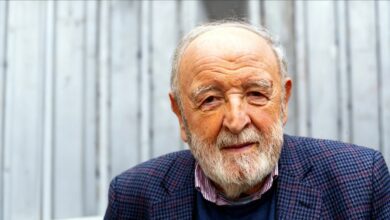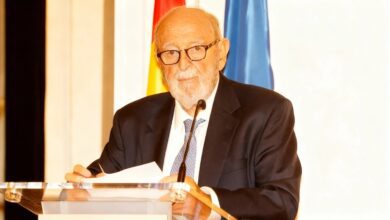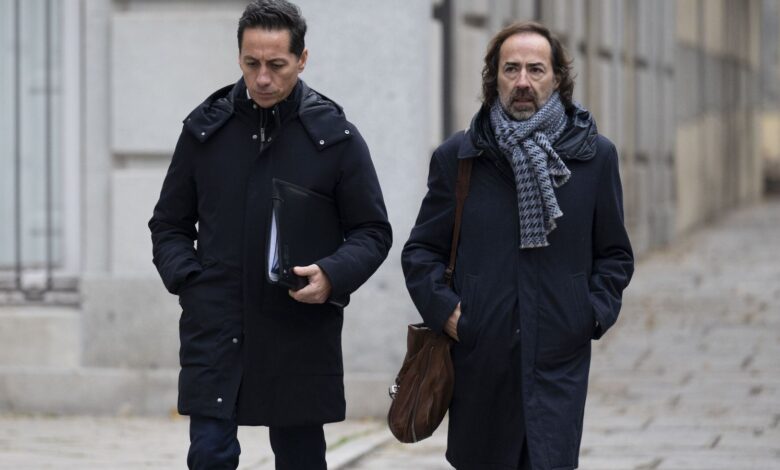
The Supreme Court of Spain has questioned Manuel José García Alconchel, former director of southern regional and African construction at Acciona. He is suspected of involvement in a scheme to pay illegal commissions through Servinabar, a company linked to former PSOE organization secretary Santos Cerdán. Alconchel strongly denied any wrongdoing and claimed he did not know Cerdán. However, the judge remained skeptical of his testimony, allowing the defendant to remain free but under restrictions: his passport was confiscated, he was banned from leaving the country, and he must report to the court every two weeks.
One detail especially drew the judge’s attention: for a large contract in Sevilla, Servinabar supplied only a single worker—Antonio Muñoz Cano, who is Cerdán’s brother-in-law. According to court records, this employee was not even able to reach the site by himself—all organizational matters were handled personally by Alconchel. This raised doubts about whether services were truly rendered and prompted questions about the justification for multimillion-euro payments.
The secret scheme
The investigation into this episode was conducted as part of a separate case related to the so-called ‘Koldo case’ (Koldo). Investigators from the UCO and the anti-corruption prosecutor’s office uncovered a parallel scheme in which, according to their account, Serdán and his associates received commissions for facilitating government contracts. According to the case materials, Acciona teamed up with Servinabar to participate in tenders and then paid Serdán’s company and his partner Antxon Alonso a 2% commission on the contract value.
The scheme was particularly evident during the construction of the Puente del Centenario bridge in Seville. Here, it is claimed, Servinabar received €1.8 million for ‘work’ that essentially amounted to having a single employee present at the site. Investigators noted that such payments were often disguised as consulting services or occupational safety support, although there was no actual involvement.
Questioning and Testimonies
Before the judge, Alonchel stated that he had no personal contact with Serdán and was not aware of any illegal payments. He admitted signing a memorandum of cooperation with Servinabar in 2017, but insisted it was merely a declaration of intent, not a binding contract. According to him, the decision to cooperate was made by his superior, Justo Vicente Pelegrini, and Servinabar was already an Acciona partner by the time he joined the company.
Alonchel also emphasized that the contracts for services related to the construction of the bridge were never fulfilled, except for one contract for work at the Port of Sevilla, where Servinabar provided a single worker. He denied the existence of a fixed 2% commission and explained that such amounts supposedly reflected the market value of occupational health and safety services.
The Role of Servinabar
Investigators believe that the key figure in organizing the scheme was Servinabar administrator Anchon Alonso, who was recently detained in another case involving manipulation of government contracts. As part of the same investigation, Leire Díez, who worked as a plumber, was also arrested. Acciona, for its part, officially stated that all payments to Servinabar were supported by corresponding invoices and passed internal audits.
During the hearings, the prosecutor requested precautionary measures for Alonchel, including passport confiscation and a travel ban, which the judge granted. The judge noted that the defendant’s arguments did not change the overall suspicion of forming a criminal group and accepting bribes.
Financial Details
The case files include numerous documents confirming the transfer of large sums to Servinabar’s accounts. Investigators point out that these payments were often recorded as consulting fees, but in reality, the company’s involvement was minimal. For example, in the case of the bridge in Seville, all the work amounted to sending one employee on a business trip—even though he didn’t even have his own transportation to reach the site.
After the investigation began, Acciona suspended not only Alonchel but also his subordinate, Tomás Olarte, as well as former manager Pellegrini. All of them denied any involvement in the illegal commission payments and insisted that collaboration with Servinabar was in line with the company’s internal standards.