An incident that occurred on the eve of Fallas in Valencia has once again raised concerns about the safety of large public events in Spain. With unstable weather conditions and the rush to assemble festive structures, the risks for residents and visitors to the city are increasing. The accident involving the collapse of a lighting arch on Marvà street has become a warning signal for event organizers and municipal services.
According to El Pais, on Friday morning on Marvà street, near building number 17, one of the festive lighting arches collapsed on a 40-year-old woman. The victim sustained minor head injuries and was promptly taken to Hospital General de València. Police and firefighters arrived at the scene and immediately began inspecting the entire lighting system for potential defects and hazards to the public.
Weather challenges
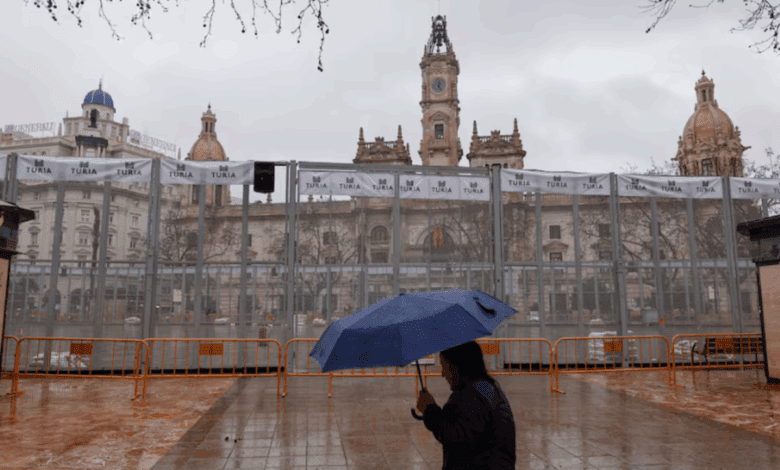
In recent days, Valencia has experienced adverse weather conditions, which have seriously complicated preparations for Fallas. Strong winds and rain have not only delayed the installation of nearly 400 festive monuments and structures, but also increased the risk of accidents. According to the municipality, it is these weather factors that may have caused the arch to collapse, as the structures are under increased stress.
In response, the Consorcio Provincial de Bomberos de València (CPBV) has developed a special protocol this year for Fallas committees and municipalities. The document provides clear recommendations for actions to take during adverse weather conditions to minimize risks for both participants and spectators. In particular, the protocol establishes different alert levels depending on official weather reports and warnings.
Safety Measures
According to the new rules, organizers are required to strengthen control over all temporary structures in case of high winds or precipitation. If a danger arises, certain events may be canceled or access to specific areas may be temporarily restricted. Special attention is given to checking fastenings, removing street furniture, and evacuating people if wind speeds reach critical levels.
For the night of Cremà, when monuments are traditionally burned, the protocol calls for expanding safety zones and introducing additional control measures. Due to the possible increase in the weight of structures from rain, firefighters recommend closely monitoring the condition of materials and the organization of the burning process. There are also recommendations regarding the use of accelerants and the distribution of responsibilities within teams to avoid emergencies.
Response of the Services and Consequences
Following the incident on Marvà Street, city services have stepped up inspections of all festive sites. Firefighters are continuing their checks, while police are monitoring compliance with new safety regulations. Authorities emphasize that any decisions to cancel or reschedule events will be based on technical assessments and official weather forecasts.
Experts note that such incidents prompt a review of safety standards at large public celebrations. In recent years, Spain has already recorded cases of temporary structures collapsing due to wind or rain, resulting in injuries and property damage. In 2024, a strong gust of wind toppled a stage at a city festival in Alicante, and in 2025, urgent evacuation of spectators was required in Murcia due to the risk of a tent collapsing. These events have pushed municipalities across the country to adopt stricter protocols and tighten control over event preparations.