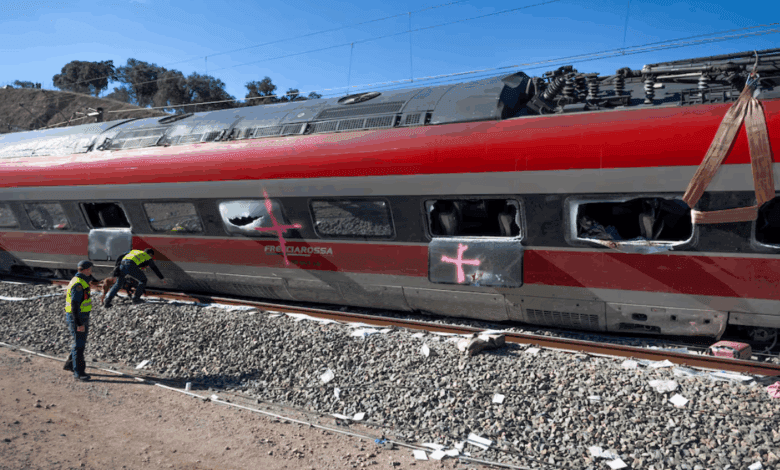
The restoration of high-speed rail service between Madrid and Andalusia is now at risk. After a recent accident near Adamuz (Adamuz, Córdoba), authorities had hoped to get trains running again within two weeks. However, those plans are now in doubt: Spain’s Minister of Transport, Óscar Puente, announced that there is still no definite timeline for reopening the line.
The cause of the delay is the lack of a court permit to carry out work along the entire damaged section. Although specialists have already started preliminary preparations—including work on the overhead lines and material logistics—full restoration is not possible without official access to the tracks. According to the minister, the department is ready to speed up the process as soon as it receives the green light from the court, but for now, the situation remains unresolved.
Delayed by court order
Speaking on national television, Puente emphasized that the ministry cannot guarantee the resumption of service by the previously scheduled date. “We don’t know if we will be able to reopen the line by February 2, because we have yet to receive the court’s authorization to work along the entire damaged section,” he said. This uncertainty has already sparked a wave of discontent among passengers and transport companies, who are being forced to adjust their plans.
Meanwhile, preparatory work continues at the scene: specialists are servicing the overhead lines and bringing in the necessary materials and equipment. All of this is being done so that, once permission is granted, track restoration can begin as quickly as possible. However, as the minister admitted, the timetable depends not only on the ministry’s efforts but also on decisions by the judicial authorities.
Incident timeline
The minister gave a detailed account of the events leading up to the accident and the actions of the emergency services. According to him, rescuers arrived at the scene extremely quickly and began assisting the injured in the Iryo train, which was the most accessible. Only after that were they able to get to the passengers of the Alvia train, which was more than half a kilometer from the collision site, in complete darkness.
Puente noted that criticism towards the rescuers, who allegedly did not help Alvia passengers quickly enough, is unfair. He stressed that emergency services do not report to the Ministry of Transport and act according to their own protocols. “When the rescuers arrived, the first thing they saw was the Iryo train, where there were injured people, and naturally, aid was given to them first,” the minister explained.
Causes of the accident
The cause of the crash remains unclear. The minister admitted that it is still unknown why the train derailed on a straight section of track without exceeding the speed limit. He also pointed out that the investigation could take an indefinite amount of time, and it is too early to draw any conclusions.
Particular attention was drawn to the fact that the accident occurred on a brand new rail installed only a few months earlier. According to Puente, the section of the line between Madrid and Sevilla had been completely renewed, and since October, not a single driver had reported any issues on this stretch. The minister added that even if an additional inspection of the rails had been carried out the day before the accident, it would not have prevented the tragedy: “Even if the inspection had taken place a day before the incident, it would not have revealed any irregularities.”
Unexpected details
The situation is further complicated by the fact that the investigation is being conducted under complete uncertainty. Judicial authorities are in no hurry to grant permission for recovery work, fearing the potential loss of evidence or a breach of procedure. This is causing frustration among representatives of the transport sector, who point to economic losses and inconvenience for thousands of passengers.
At the same time, the minister stresses that the safety and objectivity of the investigation must remain a priority. For now, passengers can only wait and hope that rail service between the country’s two largest regions will be restored as soon as possible.