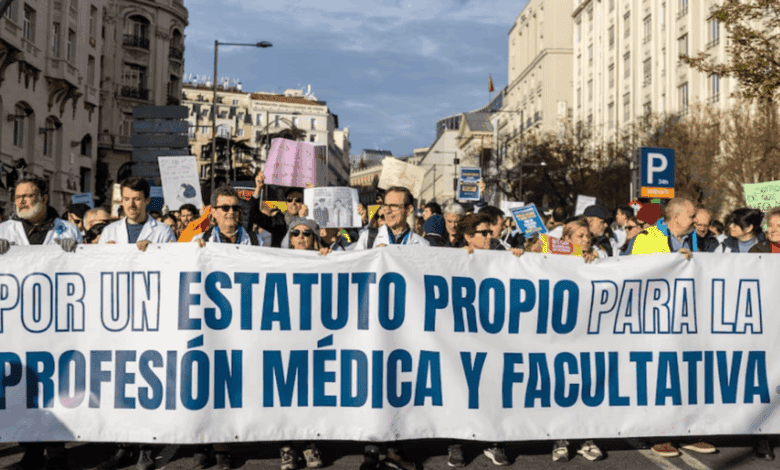
In January 2026, Spain once again found itself on the brink of a massive medical strike. Doctors from across the country decided to take to the streets and halt work for two days to demand special status and new rules for their profession. Their demands are loud and clear: the profession is tired of being ignored and demands respect for its unique challenges.
The organization Apemyf, which unites regional medical unions, initiated the strike. Doctors from Madrid, Catalonia, País Vasco, Galicia, Islas Canarias, Asturias, Aragón, Comunidad Valenciana, Murcia, and La Rioja supported the call to strike. In total, around 175,000 specialists are ready to stop working in clinics and hospitals. This is not just another protest—it’s a cry for help and an attempt to reform a system that, according to healthcare professionals, has long been in need of repair.
Doctors’ demands
At the heart of the conflict is the so-called “Estatuto Marco” (Estatuto Marco), which regulates the working conditions of all healthcare employees. Doctors believe their voice was ignored in negotiations with the Ministry of Health, and their interests were sidelined in favor of larger unions. They are calling for a separate document that would recognize the specific nature of their profession: night shifts, responsibility, and unique working conditions.
The Ministry, for its part, is firmly opposed to creating a separate status for doctors. Officials believe this would cause division within the healthcare system and disrupt the balance among all categories of medical workers. However, doctors have no intention of backing down: they are tired of endless promises and believe that only a mass strike can break the deadlock.
Geography of the protest
The strike will cover almost the entire country. Doctors from Madrid, Cataluña, País Vasco, Galicia, Islas Canarias, Asturias, Aragón, Valencia, Murcia, and La Rioja have already confirmed their participation. On January 14, a large demonstration will take place in the capital: a column of doctors will start at the Congress of Deputies and finish their march at the Ministry of Health building. This event promises to become one of the most significant protests in Spanish healthcare in recent years.
Not only regional unions joined the strike, but also major organizations such as Metges de Catalunya, Amyts (Madrid), Sindicato Médico de Euskadi (País Vasco), Sindicato Médico de Navarra, O’MEGA (Galicia), SEMCA (Islas Canarias), SIMPA (Asturias), CESM Aragón (Aragón), SIMEGA (Galicia), Sindicato Médico Avanza Valencia, MUD, AME, Sindicato Asociación Avanza Médica (Murcia), Sindicato Médico de La Rioja, SMP and SIME (Madrid). Both CESM and Sindicato Médico Andaluz expressed their support, although they are not directly participating.
Authorities’ stance
The Ministry of Health, led by Mónica García, has chosen not to ignore the protest and has reached out to regional authorities for input. In a letter to the autonomous communities, the Ministry asks for their positions on key issues: whether doctors need a separate status, if night shift pay should be increased, and whether such shifts should be voluntary. Officials stress that they have already reached a preliminary agreement with other unions on the new “Estatuto Marco,” which they describe as a long-awaited reform.
However, doctors believe their demands go beyond this document and directly affect staffing policy in the regions. They insist that without considering their viewpoint, the healthcare system cannot function efficiently. The question of night shift pay and whether overnight shifts are voluntary has become a matter of principle for many.
Disputes and prospects
Tensions are rising as negotiations between the Ministry and major unions such as CSIF, CCOO, UGT, SATSE-FSES and CIG-Saúde near their conclusion. But doctors feel excluded from the process and worry their interests will once again be overlooked. They openly express disappointment and are prepared to go the distance if authorities do not make concessions.
Doctors in Spain are tired of being bystanders in their own profession. Their demands are not a whim but an attempt to protect themselves and their patients from burnout and overload. The January strike could become a turning point for the country’s entire healthcare system. If the authorities fail to heed this warning, the consequences could be far more serious than just two days without consultations.