Heavy rains that hit Catalonia have led to an emergency situation in Llinars del Vallès. For the second day in a row, a large-scale search operation continues: rescuers are looking for a van driver who went missing during the severe storm. For local residents, this is more than just alarming news—the recent events have shown how quickly weather disasters can disrupt daily life and threaten public safety.
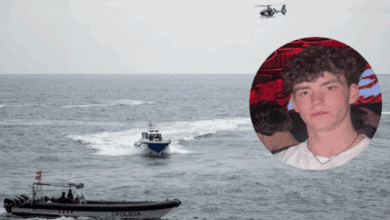
According to El Pais, on Friday afternoon, rescuers located the van between the Giola stream bed and the Mongent river. The vehicle was found submerged, with no one inside. Preliminary reports indicate that the water current carried the van about one and a half kilometers from where it entered the stream. Search efforts began Friday evening and continued throughout the night. At dawn on Saturday, new search teams joined the operation, and authorities decided to deploy aircraft—if weather conditions allow, helicopters and drones will take to the sky.
Equipment and dogs
The operation involves more than just aerial resources. Underwater specialists, dog handlers with K9s, and a special operations group (GRAE) are working on the ground. Search teams are carefully inspecting the riverbed, focusing on vulnerable areas and riverbanks along a five-kilometer stretch downstream from where the van was found. The use of drones and rescue dogs helps reach hard-to-access places where people cannot go due to flooding or unstable banks.
As reported by El Pais, the emergency call was made at 14:32 on Friday, when rescuers reached the flooded vehicle. Despite swift access, the driver could not be located. Adverse weather conditions and high water levels are significantly hampering the search. The threat of further flooding remains in the region, with rivers continuing to overflow their banks.
Parallel incidents
While the search operation continues in Llinars, other areas of Catalonia are also experiencing the effects of severe weather. On Friday evening, a rockfall occurred on the N-260 road near Sant Joan de les Abadesses (Girona). As a result, another driver became trapped inside their car. Rescuers arrived promptly, freed the victim and handed him over to medical personnel. The man was taken to Josep Trueta Hospital in Girona with serious injuries.
The elements are impacting infrastructure: due to heavy rainfall, water levels in Girona’s rivers have reached dangerous highs, and some reservoirs that were nearly empty just a year ago are now forced to release excess water. This increases the risks for settlements located downstream.
Consequences and context
Storm Regina brought rainfall to Catalonia, with some areas recording over 250 liters per square meter. Such volumes are rare and lead to a sharp rise in water levels in rivers and streams. Authorities warn of possible renewed flooding and urge residents to exercise caution, especially near bodies of water and roads, where landslides and rockfalls may occur.
According to El Pais, rescue services continue to operate around the clock, deploying all available resources. The decision to involve aircraft was made due to the challenging terrain and the scale of the flooding. In the coming days, the situation may remain tense if the rain does not stop.
In recent years, Catalonia has already faced similar weather disasters. In 2023, heavy rains caused large-scale flooding in Girona and Tarragona, with dozens of homes underwater and transport links disrupted for several days. Helicopters and drones were also deployed then to search for missing persons and evacuate residents. Such incidents highlight the importance of a rapid response by emergency services and the need for constant monitoring of hydraulic infrastructure in the region.