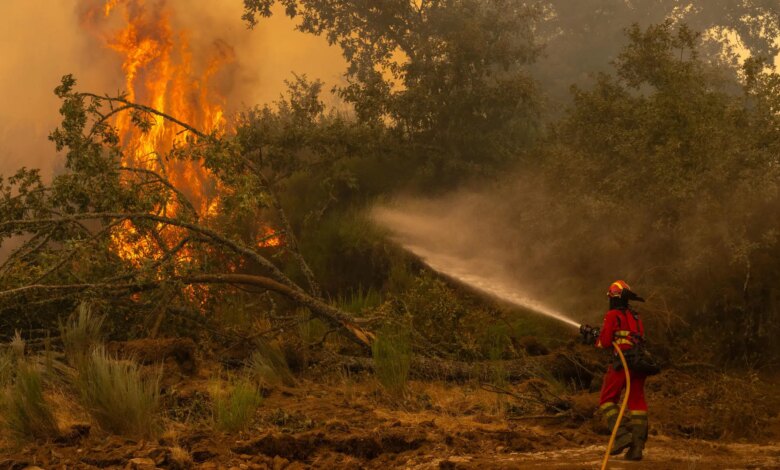
This year, Spain once again faced large-scale wildfires that spread across regions from Andalucía to Galicia and Madrid. Although the total number of outbreaks was lower than the average in recent years, the resulting damage was significantly greater. The main reasons were a combination of weather conditions and changes in the structure of rural areas.
The spring of 2025 brought heavy rains, which encouraged rapid growth of grass and shrubs in forests and fields. However, by June, abnormal heat and drought had set in, turning the fresh vegetation into dry, flammable material. This weather sequence, described by specialists as a hydro-meteorological jump, created ideal conditions for the outbreak and rapid spread of fires.
In July and August, temperatures in some regions exceeded 40 degrees, while humidity dropped below 30%. Wind contributed to the spread of flames, and dry soil combined with an abundance of dead plants provided ‘fuel’ for the fires. As a result, even small ignition sources quickly escalated into major forest fires, threatening not only natural areas but also populated communities.
Experts note that in recent decades, forest and rural land management has noticeably declined. Previously, local residents actively used forest resources, which helped control vegetation growth. Now, many areas are left unattended, leading to the buildup of dry material and increasing the risk of large-scale fires.
Another issue has been the expansion of residential construction near forests and fields. New settlements and individual homes are often built right on the border with natural areas, complicating the work of fire services. In the event of major fires, the priority becomes protecting people and infrastructure rather than fighting the fire in the forest, which increases the area of burned land.
Although the number of fires this year was below average, their intensity and rapid spread are causing serious concern among specialists. According to experts, climate change will lead to such weather conditions—hot and dry summers following rainy springs—becoming more common. This means the risk of devastating wildfires in Spain will only increase.
To effectively combat fires, experts suggest rethinking approaches to managing forests and rural areas. It is important to create breaks in vegetation, regularly clear forests of dry branches and shrubs, and inform the public about fire safety rules during high-risk periods. In addition, new climate realities must be taken into account when planning construction and rural development.
Experts emphasize that only comprehensive measures at both the national and local levels can help reduce the risk of catastrophic fires in the future. Without active prevention and adaptation efforts in response to changing conditions, Spain may face even more devastating consequences from natural disasters.