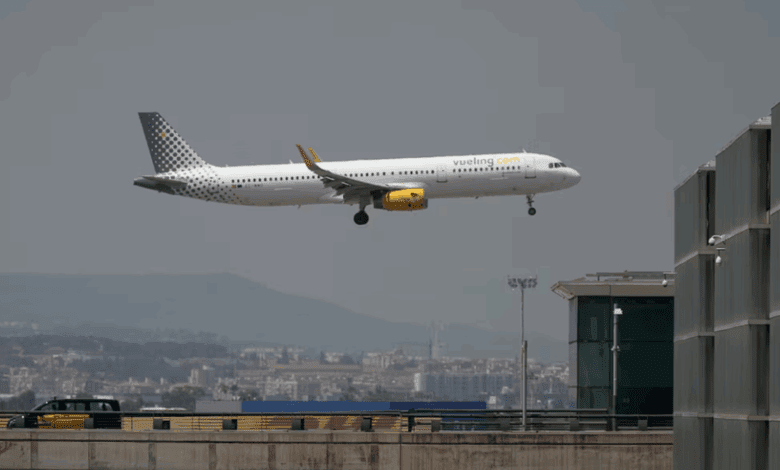
Catalonia’s El Prat (El Prat) Airport closed 2025 with a stunning milestone: 57.5 million passengers. This isn’t just a record—it’s a clear indication the infrastructure can no longer keep pace with soaring demand. The facility’s official capacity is set at 55 million, yet reality has far surpassed this limit. Last year saw a 4.4% increase, meaning 2.5 million more travelers passed through its terminals than originally planned.
The question of expanding the airport has long been on the agenda. The main argument isn’t just overcrowding, but also the need to extend one of the runways to accommodate long-haul flights. Regional authorities and the airport’s operator have already approved a €3 billion investment package. The decision wasn’t easy: environmental groups have opposed the expansion for years, concerned about the ecological impact. But a compromise has been reached, and now the airport is preparing for major changes.
Growth Without Limits
Despite all the constraints, El Prat keeps growing. The airport’s management has managed to squeeze maximum efficiency from existing resources by making greater use of less popular time slots and smoothing out seasonal peaks with a more even spread of flights throughout the year. Notably, growth here has outpaced even Madrid’s Barajas (Barajas), where passenger numbers rose by 3% to reach 68.1 million.
The main driver is international routes. In 2025, the number of passengers on overseas flights increased by 6.2%, reaching 43.2 million. Domestic flights, on the contrary, declined slightly: down 0.6%, totaling 14.1 million people. This shows that Barcelona is becoming an increasingly important international hub, rather than just a point within the country.
Record-breaking figures
In 2025, the number of takeoffs and landings also set a new record: 360,786 operations compared to 347,977 the previous year. Cargo transport grew even more noticeably—up 10.5% to 200,741 tons. December was especially impressive: 4.3 million passengers in a single month (a 5.8% increase) and 17,341 tons of cargo—an all-time record for the final month of the year.
These numbers are more than just statistics. They reflect a real trend: Barcelona is becoming more attractive for business, tourism, and logistics. The airport is operating at full capacity, but is still coping for now. However, without modernization, sooner or later the system will falter.
Catalonia’s achievements
It’s not just El Prat showing impressive results. Other airports in Catalonia are keeping pace. Girona-Costa Brava served 2.18 million passengers—up 9.4% on the previous year. Reus posted even stronger growth: 1.33 million people, up 13.1%. Sabadell, although operating on a different scale, also saw gains: nearly 5,000 passengers and over 62,000 operations, a 6.2% increase.
This growth shows that the region is becoming increasingly popular overall. Tourists, business travelers, and locals are all choosing air travel more often. While Barcelona was once the main draw, other cities are now starting to attract attention as well.
The Future of El Prat
Expansion plans for the airport have already been approved. In the coming years, a new terminal area will be built, the third runway will be extended, and existing terminals T1 and T2 will undergo a major overhaul. Most of the work will begin after 2031, but preparations are already underway.
The key factor is compliance with environmental requirements. The new master plan must take into account not only the growth in passenger numbers but also the reduction of greenhouse gas emissions. European legislation demands strict alignment with decarbonization goals. This means every step will be carefully calculated and coordinated with environmental standards.
The only question is whether these measures will be enough to keep up the pace of growth and retain a competitive edge. Catalan airports have already proven they can surprise. But whether they can stay ahead—only time will tell.