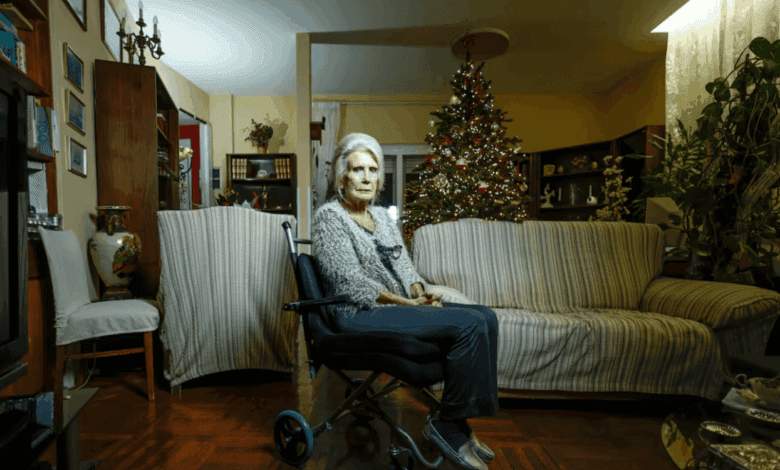
In the heart of Madrid, on the famous Gran Vía, a conflict is escalating between an elderly resident and the building owners, who are aiming to turn the historic property into luxury short-term rental apartments. María de Orube Echeveste, now 82, has lived in this apartment for many years. After the 2006 Barajas airport terrorist attack, she lost her hearing and now uses a wheelchair. Despite these challenges, María has no intention of leaving the home where she has spent most of her life.
The situation is further complicated by the fact that María holds a fixed-rate rental contract originally signed by her grandmother. This gives her the legal right to remain in the apartment, regardless of changes in ownership. However, the building’s new owners, focused on maximizing their profits, have begun to pressure her. Construction work takes place regularly without proper permits. While María cannot hear the noise, she feels the vibration through the walls. Recently, a heavy whirlpool bathtub was installed directly above her living room, raising concerns about the structural integrity of the building.
Since 2020, most of Maria’s neighbors have moved out and their apartments are now rented to visitors at prices ranging from 163 to 628 euros per night. The building does not have a license for tourist accommodation, but that hasn’t stopped the owners from continuing their business. They claim they rent the apartments for short-term stays rather than to tourists, taking advantage of loopholes in local regulations. Recently, the Madrid City Council adopted new rules requiring such apartments to be located only in buildings specifically designated for this purpose. For now, as long as Maria remains in her apartment, the owners can’t legalize their business.
Pressure and violations: How Maria survives
Since the beginning of the year, things have gotten even tougher for Maria. She receives voice messages with threats, and construction work is carried out without the necessary permits or technical assessments. The building’s owner refuses to restore the mechanical platform that Maria needs to move between floors in her wheelchair. The house, built in 1928 and classified at the highest level of protection as a heritage monument, is undergoing illegal modifications that could result in criminal charges for damage to historical property.
Local politicians and activists point out that major property owners often exploit loopholes to evict long-term residents and turn entire buildings into lucrative rentals for tourists. Despite constant threats and ongoing stress, María decided to speak out about her situation to draw attention to the problem and, in her words, try to stop actions that resemble those of the mafia.