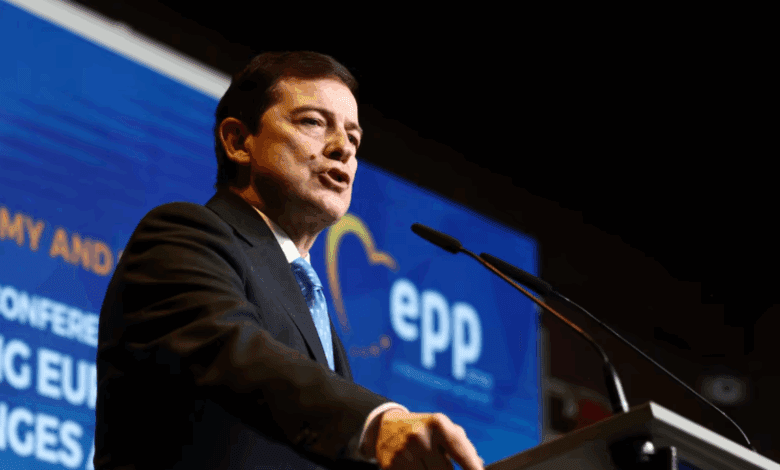
A decisive moment is approaching in Castilla y León: regional elections have been scheduled for March 15, 2026. Alfonso Fernández Mañueco, head of the regional government, has made full use of his official term. Now, as his time in office comes to an end, he is obliged to announce the dissolution of parliament and the start of a new electoral race. This decision marks the culmination of months of rumors and political speculation, with the election date fiercely debated within parties and among analysts.
The region, where the Partido Popular (PP) has held power since 1987, is once again in the national spotlight. Castilla y León becomes the third region to hold elections in the current electoral cycle. Extremadura and Aragón have already gone to the polls, and Andalucía will conclude the marathon—unless there are unexpected changes.
Political background
Mañueco faces these elections with a complex legacy. Over his last two terms, he failed to secure an absolute majority in parliament. In 2019, he was compelled to form a coalition with Ciudadanos, and in 2022—with the far-right Vox party. However, the alliance with Vox proved short-lived: in 2024, Santiago Abascal’s party broke off the agreement, leaving the PP isolated and without parliamentary support.
Internal party disagreements and persistent rumors about possible election dates only fueled tensions. At one point, March 1 was seen as the frontrunner, but the final choice fell on March 15—a day many believe could ensure higher turnout thanks to favorable weather. However, even this factor does not guarantee success for either side.
Coalitions and Disagreements
Throughout his political career, Mañueco has never managed to secure enough support to govern the region alone. This time, the situation appears even more tense: a majority requires 42 seats, which seems almost unattainable for any party. Even PP representatives admit that it will be impossible without allies, and Vox is again being considered as a potential partner, despite the recent split.
The split with Ciudadanos at the end of 2021 marked a turning point. Back then, Mañueco tried to strengthen his position, banking on solo rule, but ultimately found himself in the embrace of the far right. The coalition with Vox was the first of its kind not only for the region, but for all of Europe. Vox secured key positions: the presidency of the parliament, as well as control over the ministries of culture, industry, and agriculture. The vice president became the controversial Juan García-Gallardo, a figure who has sparked much debate.
Aftermath of the Split
In the summer of 2024, the situation changed dramatically: on instructions from Vox’s national leadership, the party broke off all regional agreements with the PP, leaving Mañueco without a majority. In response, he dismissed all Vox ministers except for the head of the culture department, Gonzalo Santonja, who remained in office as an independent. This move became a symbol of political instability and heightened the sense of uncertainty in the region.
Within the PP and the opposition, there is widespread skepticism about obtaining an absolute majority. Even the most optimistic forecasts do not promise an easy victory. The question lingers: can Mañueco hold on to power, or will the region see a political shift for the first time in decades?
The intrigue of the election
The announcement of the election date marked the finale of a prolonged political drama. Months of rumors, leaks, and conflicting statements ended with official confirmation: on March 15, residents of Castilla y León will head to the polls. This time, not only the region’s future is at stake, but also Mañueco’s reputation, as he risks going down in history as a leader who failed to retain power without the support of radical allies.
Ahead lies a tense campaign where every vote could prove decisive. Political players are gearing up for a fierce contest, while voters face a choice that will shape the region’s future for years to come. The question of who will emerge victorious from this battle remains unanswered. One thing is clear: in March 2026, Castilla y León will be the stage for one of Spain’s most intriguing political showdowns.