Extremadura, a region rarely in the spotlight, has unexpectedly become the stage for a heated political battle. For the first time in its history, independent regional elections will be held here, and this time the stakes are especially high. More than a million residents of the region, spanning from Cáceres in the north to Badajoz in the south, are preparing for a decisive vote on December 21.
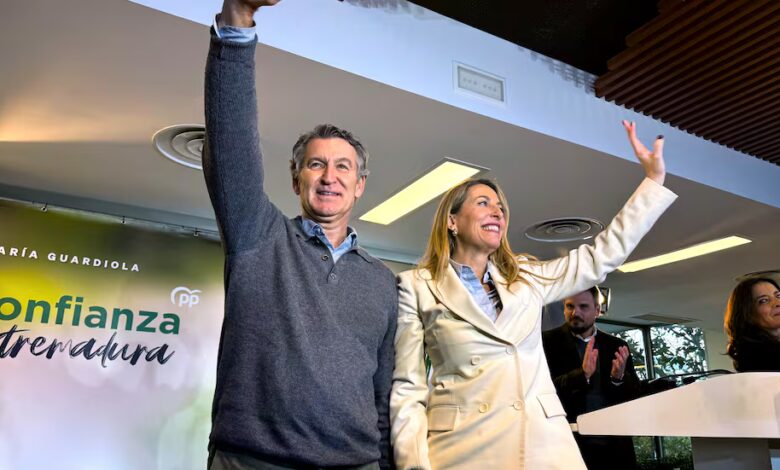
The snap election was initiated by María Guardiola, leader of the Partido Popular (PP), with backing from Alberto Núñez Feijóo. This move is reminiscent of the successful strategies deployed by Ayuso in Madrid and Moreno in Andalucía, where early elections allowed them to consolidate power. However, in Extremadura the situation is more complex: an absolute majority for PP is unlikely, and the party’s dependence on Vox may only deepen.
A bet on leadership
For PP, these elections are a chance to cement its status as the leading force and potentially bring a new influential figure to the party’s forefront. Should Guardiola succeed, she would become PP’s new baroness, and the party would gain significant momentum ahead of upcoming elections in Castilla y León, Andalucía, and on the national stage. But if PP fails to curb Vox’s influence, it risks becoming even more dependent on the far right.
Polls show that PP is consistently ahead of PSOE, but reaching the desired majority will be difficult. Many votes have shifted from the Socialists to PP, but Vox is also gaining ground among right-wing voters. This poses a double threat for Guardiola: on one hand, the party is cementing its lead, but on the other, it’s strengthening a competitor on the right.
Risks for PP
Experts note that Vox’s electorate is highly loyal: over 80% of voters are willing to support the party again. By comparison, PP’s figure is slightly lower. Even if PP overtakes PSOE, forming a government without Vox’s support will be nearly impossible. Moreover, Vox is already hinting that it is prepared to set tough conditions for its support, which could lead to humiliating concessions from Guardiola.
If PP fails to surpass the united left opposition in terms of seats, the situation will become even more complicated. In this case, electing Guardiola would require not only Vox’s abstention but their direct consent, giving the far-right additional leverage.
The Socialists’ Position
For PSOE, these elections could become the most unsuccessful in the region’s history. Although the party starts with a relatively high result from the previous elections, polls predict a significant decline. The Socialist candidate, Miguel Ángel Gallardo, faces serious challenges: his name is associated with a court case over alleged irregularities in hiring Pedro Sánchez’s brother.
The Socialists are betting that the campaign will focus on regional issues, where Guardiola has no clear advantage. However, only a third of the region’s residents give her a positive assessment. Gallardo accuses the PP of slowing down industrial projects, particularly the construction of a battery factory in Navalmoral de la Mata. Additionally, the Socialists warn of risks to democracy if the PP and Vox form an alliance.
Vox and the left
Vox, despite the low profile of its candidate Oscar Fernández, is steadily gaining support. The party is expected to double its seats in the regional parliament. Nevertheless, immigration—a traditionally key issue for Vox—does not resonate in Extremadura as it does in other regions of the country.
Unlike at the national level, where Vox outpaces the PP among young people and men, in Extremadura the far-right is not yet able to compete with the PP directly. However, their influence on the formation of the next government will be significant, especially if the PP falls short of an absolute majority.
On the left flank, the situation is paradoxical: despite the general decline of alternative left-wing parties across Spain, Unidas por Extremadura may improve its standing. The coalition is counting on disappointed PSOE voters, more harmonious relations between Podemos and Izquierda Unida, and the popularity of Irene de Miguel.
In case you didn’t know, María Guardiola is one of the most prominent figures in contemporary Spanish politics, leading the Partido Popular in Extremadura. Her political career began in Cáceres, and in 2023 she headed the regional government for the first time. Guardiola is known for her tough stance toward Vox and her drive for the PP’s independence in the region. Her decisions often spark national debate, and her leadership style draws both support and criticism from colleagues and opponents alike.