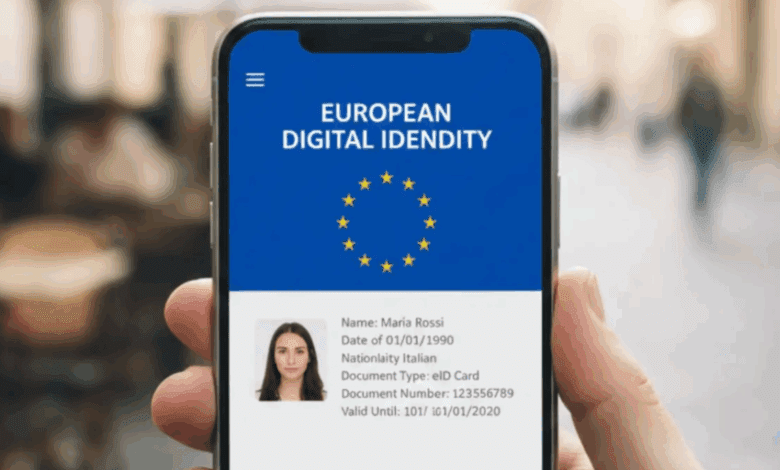
The European Union is launching a unified digital identification system that promises to reshape how people access government and private services. The new European digital passport is not just an electronic version of a conventional document—it’s a comprehensive tool for identity verification, storing important papers, and managing personal data. In the coming years, residents of Spain and other EU countries will be able to use it for a wide range of purposes—from processing documents to opening accounts abroad.
The digital identification system has been developed to meet modern security and privacy standards. Now, every citizen, resident, or company can store not only their passport but also driver’s licenses, medical prescriptions, diplomas, and other official documents in a special app. All data is protected, and users themselves decide what information to share and with whom. This is especially important in an era when most services are moving online and cyber threats are on the rise.
Features and Benefits
With the digital passport, residents of Spain will be able to verify their identities when accessing government and private services, sign documents with an electronic signature, and quickly and securely share relevant certificates. For example, buying tickets, renting housing, or arranging medical services will no longer require carrying paper documents—everything will be available on your smartphone.
In addition, digital identification will make it easier to open bank accounts in other EU countries, speed up verification for employment and education, and reduce the risk of fraud. Authorities promise that users will be able to track who requested their data and when, maintaining full control over the information-sharing process.
Security and control
One of the key principles of the new system is personal data protection. Users choose which information to share with an organization and which to keep private. All actions are recorded, helping prevent unauthorized access and build trust in digital services.
The rollout of the digital ID is also expected to cut bureaucracy and speed up application processing. By the end of 2026, all EU countries are expected to complete the transition to the new system, and every citizen will be able to obtain their digital ID free of charge.
Practical application
The digital ID can be used for both online and offline services—for example, when renting a car, visiting a doctor, or enrolling at a university. The system supports electronic signatures, allowing users to sign contracts and applications without being physically present.
For businesses, this opens up new opportunities: companies will be able to verify client and employee data faster and offer new digital services. At the same time, for citizens, it guarantees security and convenience when dealing with both government and the private sector.
The Future of Digital Identification
The move toward unified digital identification is not only a technological milestone, but also a social one. It aims to make life easier and services more accessible for all residents of the European Union. In the coming years, new features and expanded capabilities of the digital passport are expected, further strengthening the EU’s position as a leader in digital innovation.
In case you didn’t know, the European Commission is responsible for coordinating the rollout of digital identification across the entire union. The organization develops security standards, monitors the protection of citizens’ rights, and supports member states at every stage of the transition to the new system. The introduction of the digital passport is part of a broader strategy to develop the digital economy and enhance Europe’s global competitiveness.