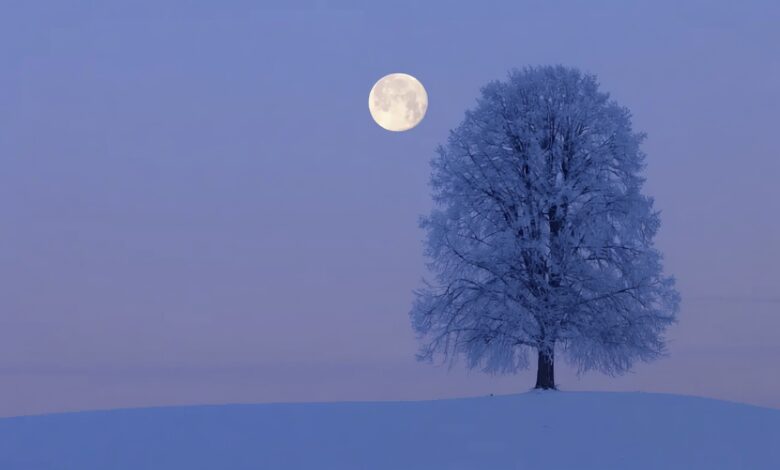
In February, residents of Spain witness a rare astronomical phenomenon that not only beautifies the night sky but also influences cultural traditions, triggers mass movements, and even alters holiday plans. A lunar eclipse and an unusually bright full Moon spark discussions on social media and among astronomy experts. This year, the Moon—known as the ‘Snow Moon’—appears at the very heart of winter, when nights are especially long and the skies over many regions of Spain remain clear and transparent.
For many people in the country, this is more than just a beautiful spectacle. The February Moon coincides with the start of the Lunar New Year, which is particularly significant for Chinese communities in Madrid, Barcelona, and Valencia. These days, the streets fill with parades, fireworks, and festive events, while transport hubs report record passenger flows. Still, not everyone is pleased: some experts warn of environmental risks due to widespread fireworks displays and increased light pollution.
Origins and traditions
The name ‘Snow Moon’ came from North America, where February was considered the harshest month for hunting and survival. In Spain, the term caught on thanks to popular astronomy calendars and growing interest in rare natural phenomena. In different cultures, the February full Moon has its own names: for the Cherokee—’Bone Moon’, for the Celts—’Ice Moon’, and in the southern hemisphere, it’s known as the ‘Barley Moon’ or the ‘Red Moon’.
In recent years, Spanish astronomers and night-sky enthusiasts have noted that the February Moon stands out the most, thanks to the long winter nights. In Andalusia, Catalonia, as well as the Balearic and Canary Islands, special excursions are organized to natural parks and Starlight reserves, where you can see the Moon without interference from city lights. Some regions even introduce temporary restrictions on the use of street lighting to avoid disrupting observations.
Astronomical features
This year, the full Moon appears just after sunset—between 17:40 and 18:20, depending on the region. Residents of Barcelona and Vigo will be the first to see the huge reddish disk rise above the horizon, gradually turning to a silvery-white shade. For astronomers, it’s an opportunity for unique observations, and for photographers—a chance to capture rare shots.
An unexpected event was the announcement of an upcoming annular solar eclipse, visible only from Antarctica, but widely discussed in Spain. In 2027, the February Moon will coincide with a lunar eclipse that can be observed from Europe, Africa, and Asia. Such coincidences spark excitement among tourists and astronomy fans, and tour operators are already offering special trips to the country’s best observation points.
Impact on life and celebrations
The February Moon affects not only astronomers but also the daily life of Spaniards. Major cities report an increase in nighttime strolls, higher demand for tours, and a surge in telescope rentals. Extensive celebrations take place in the Chinese quarters of Madrid and Barcelona, accompanied by mass movements and temporary changes in public transport schedules.
However, not everyone sees this phenomenon in the same light. Social media users discuss its impact on the environment, and some residents complain about the noise and lights from fireworks. Experts recommend choosing remote spots with minimal light pollution for observation—such as nature parks in Andalusia, Aragon, or the Canary Islands. Authorities in some municipalities are even considering temporarily restricting fireworks shows near specially protected areas.
Where to watch
For those who want to see the February Moon in all its glory, experts suggest heading to mountain regions or the coast, far from city lights. Popular destinations in Spain include Sierra de Grazalema in Andalusia, the Pyrenees in Catalonia, as well as the islands of Tenerife and Mallorca. Here you can not only admire the Moon but also join night tours organized by local astronomy clubs.
This year, interest in the February Moon has soared: tour bookings and equipment rentals for observations have increased by 30% compared to last year. Social networks are buzzing with discussions about the best locations and people are sharing photos, while some municipalities are even holding contests for the best night sky shot. The unusual combination of astronomical events and cultural traditions is making the February Moon one of the most talked-about winter phenomena.