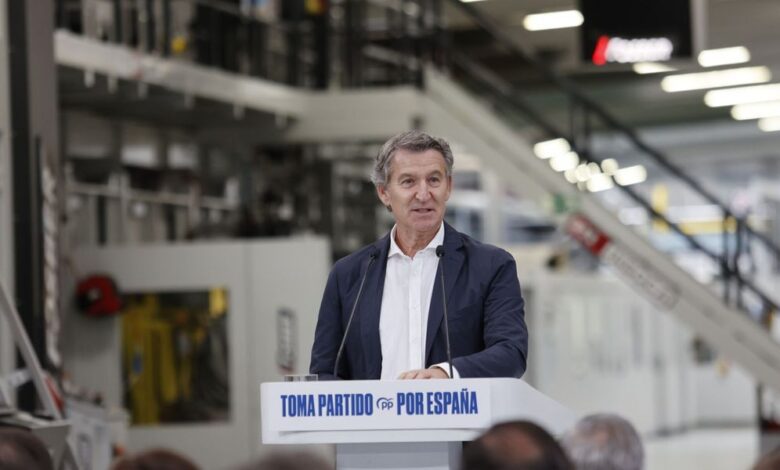
Spain has again seen heated debate over yet another increase in mandatory payments for the self-employed. This time, it marks the tenth adjustment in the last two parliamentary terms. Alberto Núñez Feijóo, leader of the Partido Popular, did not hide his emotions when meeting with business owners and freelancers in Soria. In his view, the money paid by working people should not be spent on questionable needs, but instead invested in the country’s development.
Feijóo noted that it is becoming increasingly difficult to make ends meet in the country. He believes that working is becoming unprofitable: taxes are rising, while living standards are falling. According to him, Spain is turning into a place where production is too expensive, but for tricksters — too cheap. The opposition leader also pointed out that the current government has collected 142 billion euros more than the previous one, yet the country has ended up in even deeper debt.
As an alternative, Feijóo suggested a comprehensive package of measures to support the self-employed. These include lowering taxes, simplifying bureaucratic procedures, and encouraging the transfer of businesses to young people. He pledged to abolish VAT for those earning less than 85,000 euros, allow annual tax reporting, and introduce a special contract for passing businesses on to the next generation. In his view, reducing the tax burden is not just a desire, but a necessity, especially for those who do not earn even the minimum wage.
During his visit to the INSoca factory in the Las Casas industrial zone in Soria, Feijóo met with entrepreneurs and self-employed workers. He was accompanied by the head of the Castile and León region, Alfonso Fernández Mañueco, who also spoke out against the central government’s tax policy. Mañueco noted that Soria faces double injustice: the absence of benefits authorized by the European Union and the inaction of local authorities, who, in his view, are more concerned with supporting the government than with helping residents.
Feijóo stressed that the central government is not making use of European opportunities to support sparsely populated regions. He recalled the existence of an EU directive that allows for lowering costs for employers in provinces such as Cuenca, Teruel, and Soria, and promised to implement these measures if his party comes to power.
The situation in the region remains tense: the number of self-employed people exceeds 5,000, but over the past few years, this number has declined by 10%. The challenge of generational renewal is particularly acute, as most entrepreneurs are already over the age of 60.
The economic agenda transitioned smoothly into a discussion of demographics. Feijóo supported orderly and legal migration, which he believes will aid integration and the development of the system. He is convinced that newcomers must obey the law, work, and pay contributions; otherwise, they cannot expect to be supported at others’ expense.
At the conclusion of the meeting, the opposition leader expressed support for rural areas. In his view, attitudes toward work need to change and conditions must be created to make life in the provinces attractive again. He believes that mid-sized cities are best positioned to become growth centers and attract new professionals, unlike left-wing groups who, he said, are more concerned about the closure of bars than the development of small businesses.