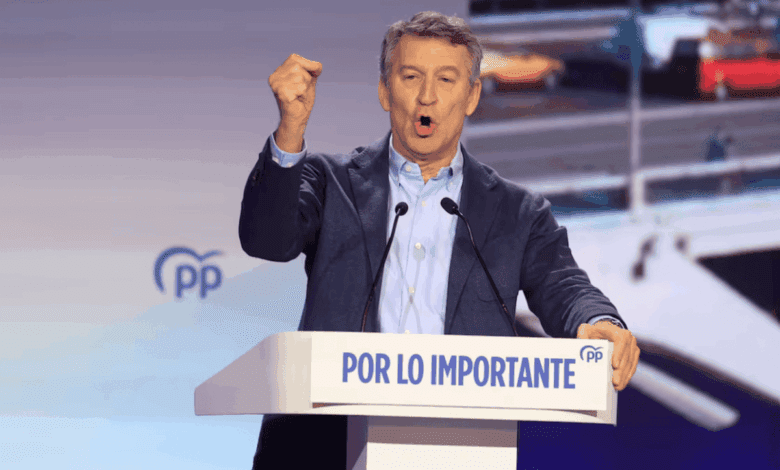
A new scandal is erupting in Spain’s political arena: Alberto Núñez Feijóo, head of the Partido Popular, has been officially summoned to testify before Congress. The reason is an investigation into the circumstances and management of the DANA disaster, which claimed 230 lives in 2024. The hearing is scheduled for February 2, and the whole country is watching closely.
The decision to summon Feijóo was approved by a majority of PSOE and Sumar representatives on the parliamentary committee. The politician will have to clarify exactly what information he received during the height of the tragedy, as well as comment on his subsequent public statements. On the same day, but later in the afternoon, a 112 emergency services employee will answer the committee’s questions, and a week later, Carlos Mazón’s former chief of staff, José Manuel Cuenca, will testify.
Political pressure
Members of Compromís have shown particular persistence in demanding Feijóo’s testimony. Their deputy, Alberto Ibáñez, has repeatedly accused the opposition leader of hiding the truth and has even labeled the Partido Popular a “criminal organization.” In his view, Feijóo must disclose details of his communications with the then-president of Valencia, Carlos Mazón, and explain why his statements contradicted reality.
Initially, Feijóo was to be heard as early as the following week, but the committee postponed the session to early February. This decision sparked debate: some believe the authorities are stalling, others think they are preparing the ground for tougher questioning.
Conflicting testimonies
The situation became more complicated after Feijóo admitted during questioning by the judge that he had not received all the information from Mazón that he had previously claimed in public. In the first hours after the disaster, the politician insisted he was “aware of the events in real time,” but later provided WhatsApp correspondence to the court that indicated otherwise.
In December 2025, Feijóo sent the judge messages he received from Mazón on the day of the tragedy. Later, at the court’s request, he also submitted his own messages. This exchange of data became a turning point in the investigation, as the accusations of distorting facts are based precisely on these exchanges.
Unanswered questions
The commission intends to find out why the opposition leader made such confident statements about his awareness if, in reality, the situation was different. Authorities demand explanations: was this a deliberate deception or a misunderstanding between politicians? Answers to these questions may affect not only Feijóo’s reputation, but also the balance of power in Spanish politics.
Summoning Feijóo to Congress is more than just a formality. It is an attempt to shed light on the opposition’s actions at a critical moment for the country. At a time when society is demanding transparency and accountability, any attempt to conceal the truth becomes a dangerous game.
Next steps
In the coming weeks, the commission will continue hearing key witnesses. In addition to Feijóo, they plan to question an emergency service employee and Mazón’s former chief of staff. Each of them may add new details to the overall picture of what happened.
Judging by the intensity of emotions, the hearings promise to be tense. Questions for Feijóo will be tough, and his answers will be scrutinized not only by politicians but by the entire country. Spain awaits the outcome, as trust in both the government and the opposition is at stake.