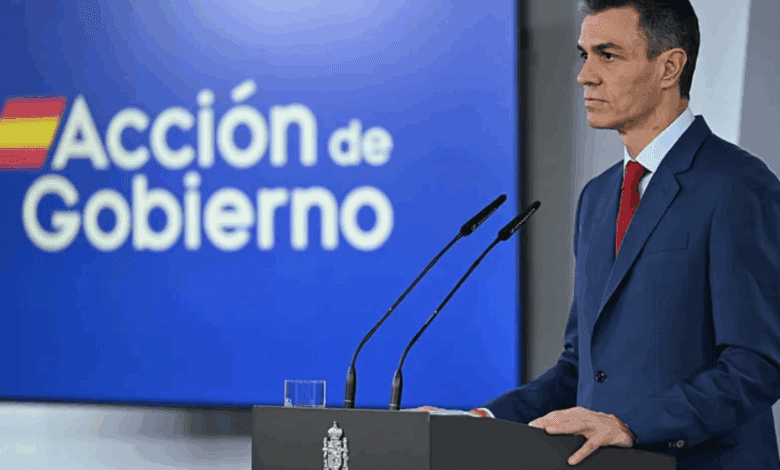
Spanish Prime Minister Pedro Sánchez’s strong statement regarding US actions marked an unexpected turn for all of Europe. His words sparked a surge of reactions among politicians and experts, as the issue concerns not only diplomacy, but also the future of Spain’s role on the world stage. According to El Pais, the Financial Times highlighted Sánchez as the only European leader who openly confronts Donald Trump, unafraid of the consequences for the country.
Unlike other heads of state who prefer to smooth over disagreements with Washington, Sánchez chose the path of direct criticism. He recalled the ‘No to War’ slogan that in 2003 united Spanish society against the invasion of Iraq. This time, the prime minister questioned not only the objectives of the US military operation, but also the very logic of Spain’s involvement in such conflicts. As reported by El Pais, Sánchez emphasized that no war has ever brought about a just order or real improvements in people’s lives, and that building missiles instead of hospitals always benefits the same players.
Europe’s Reaction
The Financial Times notes that such statements are rarely made by European Union leaders. Most prefer to appeal to Trump’s personal interests or avoid contentious topics altogether. However, according to the British outlet, Sánchez became the only one who dared to openly oppose the US stance. This has raised questions among European politicians: has the Spanish prime minister gone too far by refusing to grant Americans access to joint military bases for operations against Iran?
Experts interviewed by the Financial Times are divided in their opinions. Professor José Luis Manfredi believes that such a move could cost Spain diplomatically, since the United States can easily find alternative bases. At the same time, Amanda Sloat, former adviser to Joe Biden, says that it is the silence of other European leaders that makes Sánchez’s stance especially noticeable. She emphasizes that the Spanish prime minister has always been the most consistent critic of Trump among his European colleagues.
Domestic repercussions
At home, Sánchez’s actions have sparked a mixed response. His supporters believe that openly confronting the US strengthens Spain’s position as an independent player. Opponents fear that such a policy could lead to isolation and a loss of influence on the international stage. As the Financial Times points out, clashes with Trump have helped Sánchez consolidate his support among left-wing voters, but have also intensified dissatisfaction among those who advocate close cooperation with the US.
El Pais highlights that Sánchez did not stop at refusing military cooperation. He also drew comparisons between the actions of the US and Israel and the events of 2003, when the invasion of Iraq sparked mass protests across Spain. Such parallels are heightening tensions between Madrid and Washington and raising concerns among NATO allies.
Context and consequences
The issue of military bases and Spain’s involvement in international operations remains one of the most contentious in recent years. Decisions made in Madrid have a direct impact on the country’s security and economy. Just as Valencia’s authorities recently debated the fate of urban spaces and how these decisions affect residents’ lives, there are clear parallels with how foreign policy can influence internal stability. For example, the discussion about the future of the García Lorca boulevard in Valencia demonstrated that even local decisions can spark major changes.
In recent years, Spain has repeatedly found itself at the center of international disputes involving military operations and relations with the United States. In 2024, the issue of expanding the US presence at military bases in Rota and Morón was discussed, sparking protests among local residents and politicians. Then, as now, arguments focused on the need to protect national interests and prevent the country from being drawn into foreign conflicts. Such situations highlight how crucial it is for Spain to maintain a balance between its allied commitments and domestic stability.