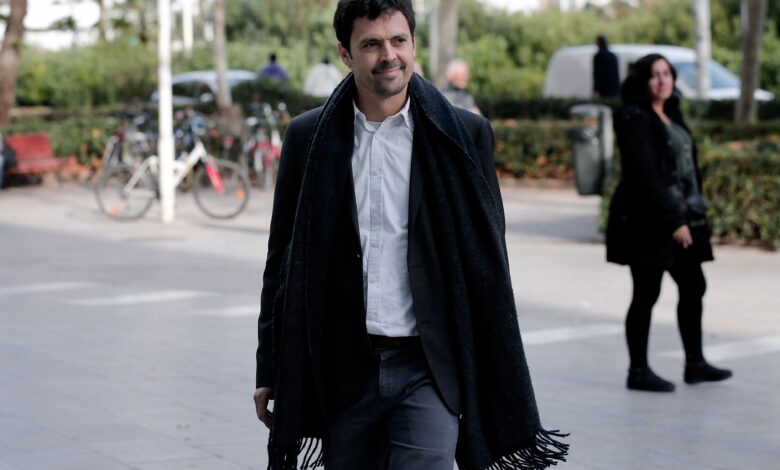
Spain is preparing for a major change in passenger transport: Renfe plans to launch its own bus company to cover routes during rail service disruptions. This move addresses the need to respond quickly to accidents, maintenance work, and other emergencies that have become more frequent on the country’s railways in recent years. According to El Pais, the leading candidate to head the new unit is former Rodalies chief Josep Enric García Alemany, who was recently dismissed following a high-profile accident near Gelida.
El Pais reports that García Alemany is seen as the most likely choice to lead Renfe’s new division, which will manage bus transport during rail network disruptions. His background in transportation goes beyond the rail sector: from 2015 to 2020, he ran Empresa Municipal de Transporte (EMT) in Valencia. During his tenure, EMT was hit by the largest fraud scheme ever seen in a Spanish public company, when scammers posing as senior management siphoned off four million euros to accounts in Hong Kong. Despite this incident, García Alemany has maintained a reputation as an effective leader in the transport industry.
Renfe strategy
Renfe plans to create a new company in partnership with a private operator, who will hold a 51% stake, while Renfe retains 49%. The plan includes building its own fleet of 50 to 100 buses and hiring full-time drivers. This structure will allow for a rapid response to emergencies related to track repairs, accidents, or natural disasters, without relying on external contractors. According to El Pais, the annual operating costs for the new company are expected to slightly exceed 60 million euros, but over ten years this could save up to 130 million compared to current spending on leasing buses from external operators.
In recent years, Renfe has repeatedly had to set up urgent replacement bus services for trains. After the accident on the Madrid–Seville line and a landslide on the Madrid–Malaga route, dozens of buses were deployed to maintain transport connectivity. Similar measures were taken in Catalonia following incidents in January, and in Valencia, where infrastructure suffered from heavy rains in autumn 2024. The new approach will enable Renfe to respond more quickly to such challenges and reduce its dependence on outside contractors.
Growing demand for buses
Internal Renfe forecasts indicate that in the coming years, demand for buses to replace trains may grow ninefold compared to current levels. On certain days, up to 500 buses may be needed—comparable to the municipal fleets of major Spanish cities. This increase is due to extensive rail infrastructure modernization projects and a higher number of unforeseen incidents requiring the rapid organization of alternative routes.
The agreement with a private partner provides for joint operations over ten years, with an option to extend for another five. Such a long-term contract is expected to ensure cost stability and predictability, as well as improve passenger service quality during rail disruptions.
Context and consequences
The launch of Renfe’s own bus company could mark a significant step for Spain’s entire transportation system. According to El Pais, similar measures have already been implemented in certain regions, but this is the first project of such scale at the national level. In recent years, widespread railway disruptions caused by accidents, weather conditions, or technical work have created considerable inconvenience for passengers. In 2023, similar actions were taken in Andalucía and Cataluña, where temporary bus routes helped prevent transport gridlock. Renfe’s new initiative may set a standard for other operators and regions aiming to improve the transport system’s resilience in emergency situations.