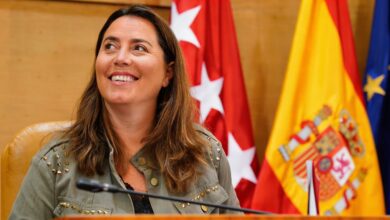
In the heart of Castilla y León, you can now find not only ancient buildings, but an entire world of disappearing words. French philologist Janick Le Men dedicated two decades of her life to collecting and cataloguing more than twenty thousand unique expressions and words characteristic of León and its surroundings. This work, embodied in six volumes, is now available online, offering access to a vocabulary that is almost never heard on the streets today.
It all began with an unexpected twist: a scholarship from the local administration prompted Janick to change her dissertation topic and focus on the region’s linguistic peculiarities. This chance decision determined her future path. Since then, she has worked tirelessly to preserve for future generations words that were once part of everyday life, but are now nearly forgotten. Among them is “abregansias,” chains used to hang a pot over the fire, which became the starting point of her research.
Many of the terms she collected are linked to everyday life and occupations that have faded away as lifestyles changed. For example, “andansio” describes an ailment—somewhere between the flu and an upset stomach—or “facendera,” meaning collective work carried out by villagers. There are others whose meaning is clear only to locals: “abechugarse” — to take shelter from bad weather, “abafado” — a stuffy room or a person with a swollen body, “afogonarse” — to tire quickly of a task, and “fafota” — a person prone to boasting.
Interestingly, some words in León have taken on unique meanings. For example, “galgo” here refers not only to a dog, but also to a stone rolling down a hill, and “agarrar” means not simply to grab, but for animals to become pregnant. Even the familiar “cachondearse” in this region carries a different sense—it describes playful behavior among young people. Le Men acknowledges that her work is not the result of field trips to villages, but rather of meticulous study of materials previously gathered by others. She has brought together scattered information into a unified system to preserve a disappearing layer of culture.
This large-scale project was only completed in 2012, when the final volume was published. For Janick herself, the hardest part was staying motivated: working with the files took long hours, and more than once she was tempted to give up. But now, with the dictionary available online, León’s vanishing words have a second chance at life. Recently, the linguist was recognized as an outstanding figure in the region, and her work has become a true monument to a disappearing linguistic heritage.