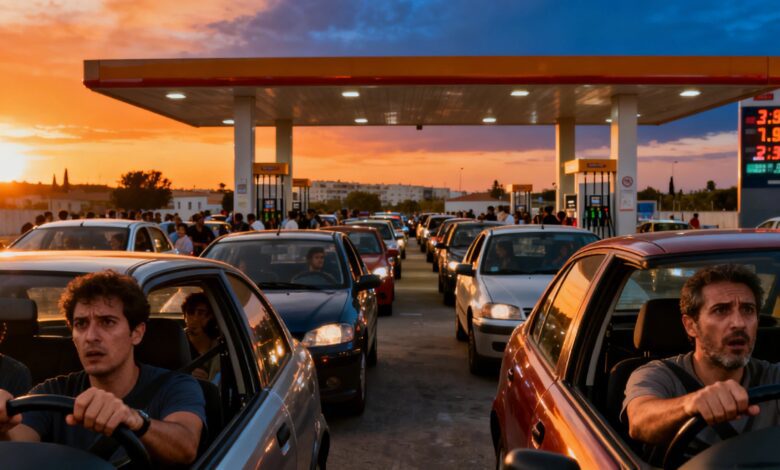
A surge in fuel prices and rising inflation have become a reality for Spaniards following heightened tensions in the Eastern Mediterranean. The cost of gasoline and diesel at filling stations has already risen significantly, with some locations reporting record highs. This directly affects household and business expenses and poses a threat to the stability of the mortgage market.
Experts warn that if the conflict drags on, rising oil prices could quickly impact other sectors—from food baskets to utility services. Such a scenario could accelerate inflation and force the European Central Bank to reconsider its rate, leading to more expensive loans and higher monthly mortgage payments.
Price trends and market response
Since early spring, the price of Brent crude in Europe has surpassed $100 per barrel, while American West Texas Intermediate has approached $96. According to the Ministry for the Ecological Transition, the price of 95-octane gasoline has increased by 13.6% in just a few weeks, and diesel by 25.6%. In some regions, a liter of fuel already costs two euros or more. Analysts estimate that if oil remains above $100, Europeans will spend an additional 150 million euros per day on fuel.
In response to the threat of supply disruptions, the International Energy Agency has decided to release 400 million barrels from strategic reserves. However, this measure has not yet produced the expected effect—prices continue to rise. The European Commission and the Spanish government are considering various support options for the population and businesses, including tax breaks, direct payments, and a temporary freeze on rent and utility prices.
Impact on loans and inflation
The rise in energy prices is already affecting inflation. According to Funcas estimates, if the conflict lasts for three months, inflation in Spain could exceed 3%, and economic growth may slow to 2–2.2%. Holders of adjustable-rate mortgages are particularly vulnerable: due to expectations of an ECB key rate hike, the euríbor index has risen from 2.22% to 2.46% in just a few days, marking the fastest increase in the past 20 years. For the average family, this means a monthly payment increase of 50–100 euros.
At the same time, higher interest rates benefit savers: deposit yields in Spain now average 1.64%, with the best offers reaching 3% annually. Some foreign banks offer up to 4% for short-term deposits. Economists recommend keeping an eye on ECB decisions, as further policy tightening could change the savings and lending market.
Spain’s readiness and outlook
Spain proved to be better prepared for energy shocks than many of its neighbors: imports of oil and gas from the conflict zone account for no more than 5% and 2%, respectively. The transition to renewable energy sources has allowed average electricity prices to drop by 20% compared to other EU countries. In 2025, Spain’s economy grew by 2.8%, inflation stayed at 2.3%, and the unemployment rate fell below 10%.
Nevertheless, further escalation of the conflict could put additional pressure on prices and slow growth. According to russpain.com, if the situation does not stabilize, the macroeconomic impact on Spain will become more significant, particularly for exporters and consumers.
Context and similar events
Energy price surges have repeatedly tested Spain’s economy. After the conflict in Ukraine began in 2022, the country faced similar challenges: a sharp increase in gas and fuel costs, rising inflation, and the need for emergency support measures. At the time, the government introduced temporary subsidies, reduced energy taxes, and capped rent increases. These steps helped soften the blow to households and businesses, but the negative effects could not be fully avoided. The current situation is developing along similar lines, but the experience of previous years enables a faster response to new challenges.