Seven people have been arrested in León on suspicion of illegally excavating and selling archaeological artifacts. The police operation resulted in the seizure of unique items, including extremely rare coins and artifacts of significant historical value. According to the investigation, the suspects acted as an organized group and carefully concealed their activities.
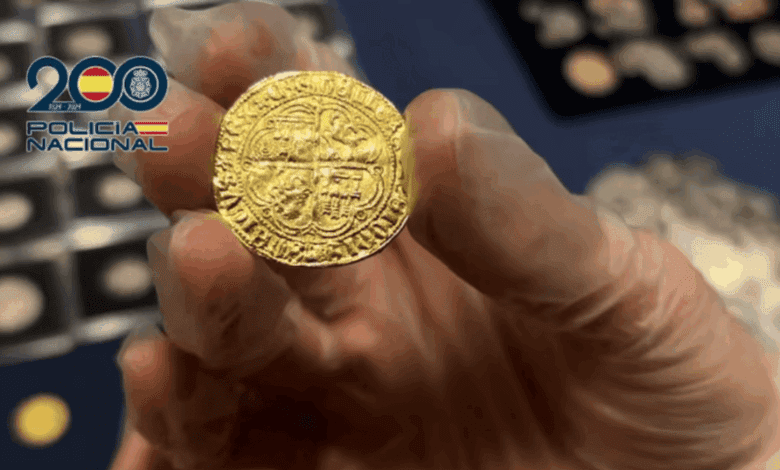
During searches, police officers found a gold coin dating back to the Visigothic era of the 6th century, as well as around six thousand silver coins and about a thousand other archaeological objects. Among them were fibulae, spearheads, rings, and ceramics. All of these items were meticulously sorted by era and condition to be later sold through online platforms and private social media groups.
Investigation and arrests
The operation, dubbed “Crown,” began in January after a man tried to discreetly sell several gold and silver coins, along with unique pieces from a Visigothic hoard, at a numismatic event in Andalucía. This raised suspicions with the police and triggered a large-scale investigation that led to the discovery of a criminal group specializing in the illegal trade of historical valuables.
During the searches, authorities seized not only artifacts but also electronic devices, documents, nine metal detectors, three luxury cars, and nearly 50,000 euros in cash. Experts estimate that the total market value of the confiscated items could have reached one million euros on the black market.
Methods and technologies
Those detained had significant experience in the search and extraction of antiquities. While working at historical sites in the provinces of León and Valladolid, they used modern metal detectors capable of operating at different frequencies, allowing them to find objects at considerable depths. They also used shovels and pickaxes to retrieve especially valuable finds.
To avoid drawing attention, group members left their cars at a considerable distance from the excavation sites. On occasion, private vehicles were used to transport buyers in order to evade surveillance. Once uncovered, the artifacts were cleaned, catalogued, and prepared for sale.
Distribution network
The acquired valuables were offered on specialized online platforms and within closed communities. Some buyers would visit the home of one of the detainees in person to purchase rare coins and relics. The client base spanned all of Spain.
Police noted that the criminal group operated in a coordinated manner and had detailed knowledge of the locations of historical sites. Special attention was given to one of the Leonese (leonés) sites, from which the largest number of silver and gold coins, including those from Roman times, was extracted.
Operation aftermath
During the final phase of the operation, which took place on December 2, nine simultaneous searches were carried out in the province of León. All confiscated items have been transferred for safekeeping to a museum under the management of the Castilla y León government, where experts will study them and determine their future.
The detainees have been charged with forming a criminal organization, committing crimes against historical heritage, money laundering, and grand theft. The investigation is ongoing, and the fate of the unique finds will be decided by experts and museum representatives.