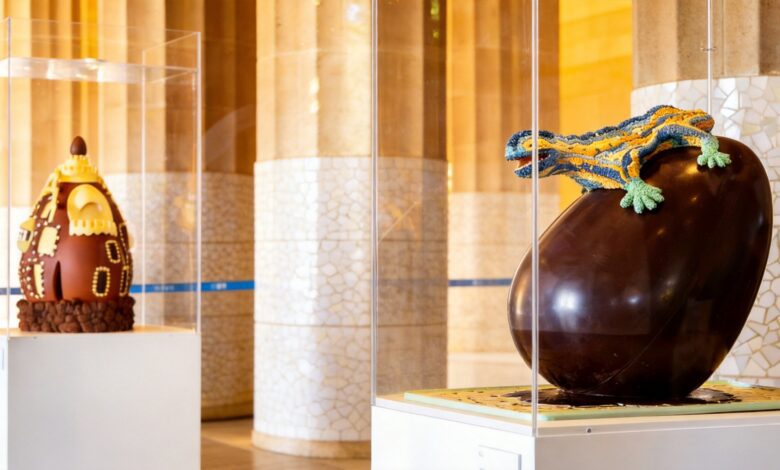
This year, Barcelona is marking several major events, and one of them is closely tied to both culture and gastronomy. For the first time in the city’s history, the iconic Sala Hipòstila at Park Güell is hosting an exhibition of giant chocolate eggs inspired by the works of Antoni Gaudí. This event not only highlights Barcelona’s status as the World Capital of Architecture, but also brings together Catalan Easter traditions with contemporary art. For locals and visitors, it’s a chance to see how classic architectural elements are transformed into sweet sculptures, and discover how today’s artisans interpret Gaudí’s legacy.
The organizers selected ten of the best pastry chefs from across Catalonia to present their own versions of Easter eggs inspired by details from Park Güell. Among them are masters from Barcelona, Vic, Tarragona, Terrassa, and other cities. Each received the task of recreating one of the park’s symbols in chocolate: from the famous salamander to curved benches and columns. The entries were chosen through an open competition among members of the Gremio de Pastelería de Barcelona, resulting in a truly unique collection.
Chocolate and Architecture
Special attention was drawn to the work of Adán Sáez from Xocosave (Riudoms), who, together with his team, created not only a large-scale egg but also a chocolate figure of the architect himself. According to the master, the structure is made entirely of chocolate, without any internal frame, making it particularly challenging to construct. Another participant, José María Rodríguez from La Pastisseria, dedicated his sculpture to the iconic benches of the park, while still maintaining the classic Easter egg shape. Among the artists was also Lluc Crusellas, the winner of the 2022 World Chocolate Masters, who presented a piece called “El huevo por la ventana.”
Exhibition visitors can not only admire the artworks, but also vote for their favorite piece using a QR code next to each sculpture. The egg that receives the most votes will be moved to the Barcelona Chocolate Museum, while the remaining sculptures will be broken during a special ceremony for children from nearby schools. This event, known as “Trencadís del Trencadís,” has become part of the Catalan tradition of breaking Easter monas.
A city celebration
The exhibition is taking place in a landmark year for Barcelona: it marks a century since Gaudí’s death and a hundred years since Park Güell was opened to the public. As El Pais notes, the exposition has come to symbolize the fusion of architectural heritage and the region’s gastronomic traditions. Organizers have taken every measure to preserve the chocolate sculptures: they are displayed under glass, in the shade, and with constant ventilation. Still, it remains to be seen whether the pieces will last until the end of the exhibition—masters are confident the chocolate will endure the challenge.
Children visiting the park eagerly await the moment when they can take part in the chocolate sculpture breaking ceremony. For many, it’s not only entertainment, but also a chance to connect with the art and history of the city. This year, the exhibition has become one of the most talked-about cultural initiatives of the spring, bringing together architecture, tradition, and creativity in a single space.
Context and traditions
In recent years, Spain has seen a growing number of projects that combine gastronomy and art. For example, exhibitions in Madrid and Valencia have featured renowned chefs creating chocolate and caramel sculptures inspired by local landmarks. In Catalonia, the tradition of making Easter mona (mona de Pascua) dates back to the 19th century, but today’s artisans are constantly seeking new ways to express their creativity. Such initiatives not only keep the craft alive, but also foster local tourism by drawing attention to the region’s cultural heritage.