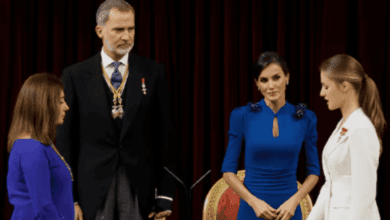
On Sunday, October 12, Madrid will once again become the stage for one of the year’s most impressive events: the military parade dedicated to National Day. The central Plaza Cánovas del Castillo will gather not only the royal couple, but also thousands of spectators eager to witness the nation’s modern armed forces demonstrate their strength and unity.
This year’s parade will involve 3,847 servicemembers, including 524 women. The streets of the capital will see 123 vehicles, 39 motorcycles, 229 horses, and even six service dogs. In the skies above Madrid, 74 aircraft—45 planes and 29 helicopters—will offer a spectacular display for everyone in the city center.
The parade will begin with the arrival of the Royal Guard’s honor battalion, followed by senior military and government officials taking their places at the main stand. At 11:00, the king and queen are expected to arrive and will be honored with military rites. An impressive parachute jump will then color the sky, as one parachutist descends carrying a massive Spanish flag. After the ceremonial flag-raising and a minute of silence for the fallen, five Pilatus PC-21 aircraft from the Mirlo group will fly over the plaza, leaving trails in the colors of the national tricolor.
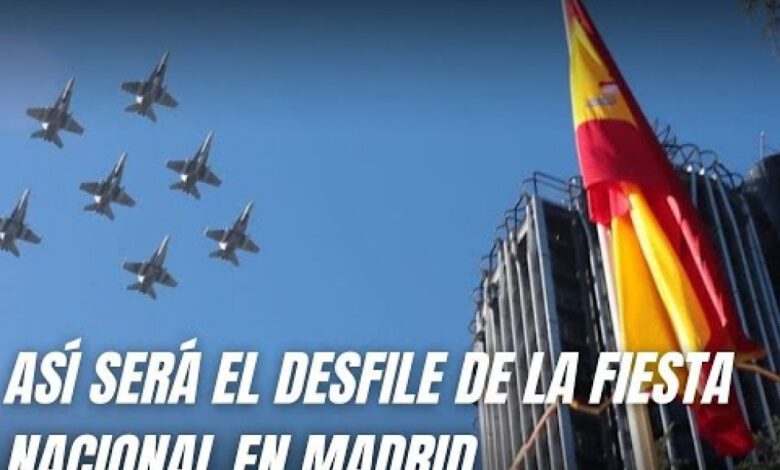
The aerial segment of the parade will open with a pair of F-18 fighters, followed by six Eurofighter Typhoons, six more F-18s, four Harriers, and four training F-5Ms. The impressive formation will be complemented by transport aircraft: Airbus A330 MRTT, A400M, A310, Falcon 900, and Cessna Citation V. There will also be Canadair firefighting planes, as well as aircraft for maritime patrol and rescue. The helicopter formation will feature NH-90, Chinook, Tigre, Cougar, H135, and Seahawk, along with police, gendarmerie, and rescue service helicopters. The aerial show will conclude with the Mirlo team—appearing for the first time with a new aircraft type.
The ground segment of the parade will consist of six columns, each symbolizing different branches and traditions of the Spanish Army. Leading the way is the Royal Guard with historical units, followed by cadets from military academies. Special attention will be drawn to the column uniting representatives of all service branches, including the Navy, Air Force, and emergency response units, which this year celebrate their 20th anniversary. The main block will be made up of infantry troops, including the renowned Inmemorial del Rey Regiment, paratroopers, artillerymen, engineers, and mountain units. The legendary Legion unit will also take part, accompanied by their mascot sheep called Baraka, as well as the Moroccan Regulars with their traditional drums and pipes.
The cavalry group will conclude the marching part of the parade: squadrons of the Guardia Civil and the National Police, as well as an artillery battery with historical cannons. After that, a column of modern military vehicles will proceed down the avenue: Leopard 2E tanks, Centauro armored vehicles, Uro Vamtac off-roaders, howitzers, radars, and heavy trucks. The Navy and Air Force will showcase their specialized equipment, including air defense systems, electronic warfare, and logistics vehicles. Emergency services units will bring out cranes, drones, specialized machinery, and vehicles for disaster response.
The parade finale will feature columns of vehicles from civilian services: police, Guardia Civil, customs, rescue teams, and humanitarian organizations. This will symbolize cooperation between military and civilian structures in matters of security and assistance to the population.
The festivities will conclude with the lowering of the national flag and the royal family’s farewell to military and civilian representatives. This year, the parade once again highlights Spain’s role in international security and demonstrates both the modernization and unity of the country’s armed forces.