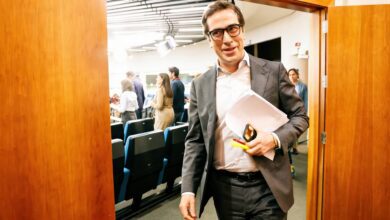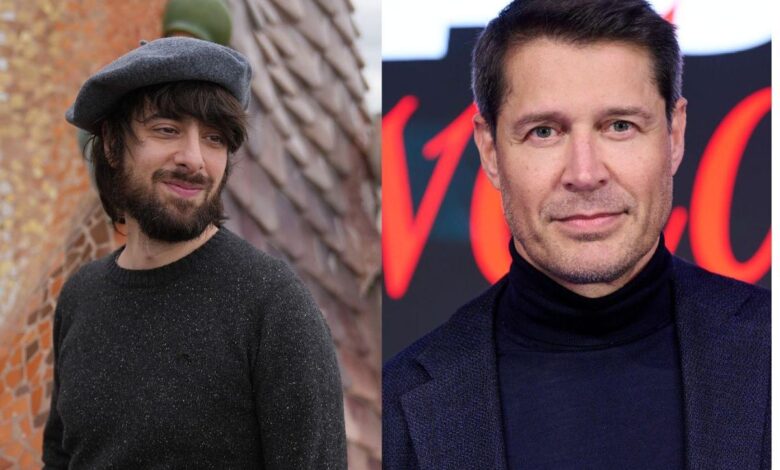
A controversial exchange between a prominent journalist and a writer has once again raised the question of the boundaries of public debates in Spain. The situation unfolded when bestselling author David Uclés refused to participate in an event due to the presence of politicians, instantly becoming a topic of discussion in the media and among the public. For many Spaniards, this case has become a reflection of deep divisions in society and sparked debates on where to draw the line between personal convictions and the necessity of dialogue.
At the heart of the conflict were not only the participants’ views but the very possibility of holding an open conversation with opponents. Uclés’ decision not to share the stage with former Prime Minister José María Aznar and ex-Vox party leader Iván Espinosa de los Monteros caused a major reaction. Journalist Jaime Cantizano, on his program ‘Por Fin’ on Onda Cero, tried to uncover why the writer declined to participate if the goal was dialogue and reconciliation.
Reasons for the refusal
During a tense exchange, Uclés emphasized that his decision was not driven by fear of dialogue but by a reluctance to be associated with certain political figures. He pointed out that he had not planned to converse with either Aznar or Espinosa de los Monteros, and his invitation was to join a section with another writer, Luis Mateo Díez. According to Uclés, he was never offered a debate with the politicians, and he considers accusations of unwillingness to engage in dialogue as unfounded.
The journalist insisted that refusing to participate in an event dedicated to civil consensus seemed like an unwillingness to hear opposing viewpoints. However, the writer stood firm: he saw no reason to appear at the same event with people whose views and actions, in his opinion, contradicted his core values. His remark about personal experiences of street violence related to his orientation, and the belief that certain political forces undermine minority rights, resonated especially sharply.
Personal Experience and Public Resonance
Amid the heated debate, Ukles pointed out that, for him, participation in such events was not just a formality but a matter of principle and safety. He shared his encounters with aggression on the streets due to his personal life, emphasizing that he wanted nothing to do with those who, in his view, fuel intolerance. This stance sparked a strong reaction in the studio and among listeners, as it touched on sensitive issues in Spanish society—minority rights, historical memory, and the boundaries of acceptable discourse in public debates.
Cantisano tried to draw a parallel with the events of the civil war, noting how people with opposing views eventually managed to sit down at the negotiating table. However, the writer rejected such comparisons, stating that he does not feel obligated to discuss literature or politics with those whose views are unacceptable to him. He stressed that he was invited to dialogue with another writer, not with politicians, and that his decision to withdraw was deliberate and based solely on the makeup of the participants.
Debate on the limits of dialogue
At the end of the conversation, the journalist again asked why the writer was unwilling to engage in open dialogue with political opponents. Ukles replied with a counterquestion—why should he do so if he sees no point in it and was not invited to that kind of discussion. He emphasized that he is ready to discuss literature and social issues with those he feels comfortable with, and that his refusal is not due to a fear of dialogue, but to personal beliefs and experience.
This incident sparked a broad debate about where personal freedom of choice ends and public responsibility begins. Questions have again been raised in Spanish society about how to build dialogue between people with opposing views and whether it is possible at all to find common ground amid growing polarization.
Similar cases
In recent years, Spain has repeatedly become a stage for heated debates when prominent figures refused to participate in events due to the presence of politicians or representatives with opposing views. Such situations often sparked lively discussions in the media and on social networks, as well as disputes over the acceptable boundaries of dialogue. One recalls how last year another writer declined to take part in a public debate, citing disagreement with the stance of one of the invited politicians. These cases illustrate how pressing the question remains about who is willing to engage in conversation with whom in contemporary Spain.
Earlier, we took an in-depth look at why the decision of well-known authors to refuse joint appearances with politicians causes such a strong public reaction. In our article “Resonance around a writer’s refusal to take part in a discussion with Aznar and a Vox politician” we examined the reasons why such actions spark debates about the limits of dialogue and tolerance in Spanish society.