In Barcelona, on Passeig de Sant Joan, stands one of Spain’s most unusual libraries—the Arús Public Library. For over a century, a bronze statue has been kept here, rarely noticed even by regular visitors. This replica of the famous Statue of Liberty was installed in 1895 and has since become an integral part of the building’s history.
The sculpture, created by Manuel Fuxà and cast by Italian craftsman Eduardo Luis Razzauti, greets guests right at the entrance. Unlike the original in New York, the book in the statue’s hand is engraved with the Latin phrase “Anima Libertas,” which translates as “Freedom of the soul.” This motto reflects the views of the library’s founder, journalist and Freemason Rossend Arús, who aimed to make knowledge and culture accessible to all.
Rossend Arús envisioned the library as a center of enlightenment and free thought. After his death in 1891, the building was remodeled by architect Bonaventura Bassegoda and became a meeting place for the workers’ movement and supporters of progressive ideas. Thanks to this project, Barcelona gained a unique space where science, art, and independent thinking were valued.
Since its opening in 1895, the Arús Library has amassed an extensive collection of books on Freemasonry, anarchism, politics, and social sciences. It quickly became an important cultural center in Catalonia, with the Statue of Liberty at the entrance symbolizing openness and a thirst for knowledge.
However, after the end of the Civil War and the establishment of the Franco regime, the library was banned. Authorities closed the building, and everything related to Freemasonry faced persecution. For nearly thirty years, the library’s doors remained shut, and the Statue of Liberty was forgotten but not destroyed. Despite the pressure, the monument survived and became a silent witness to the struggle for freedom of thought.
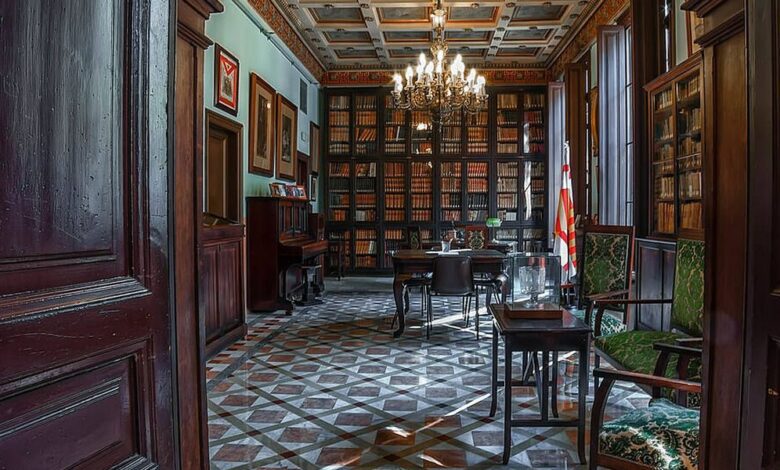
Over time, the library reopened its doors to visitors. Today, it not only showcases historical interiors but also houses one of the largest Sherlock Holmes collections in Europe, assembled by Joan Prubasta. The reading room has preserved the atmosphere of the late 19th century, and among the exhibits are references to Darwin, Miguel Servet, and other outstanding scholars.
The Arús Library is open on weekdays from 11:00 to 15:00 and is closed on weekends. For those interested in learning more about its history and collections, regular tours and exhibitions are held with free admission. Over its 127-year history, the library has become not just a repository of knowledge, but a symbol of resilience in the face of censorship and repression.
Today, the bronze Statue of Liberty continues to greet visitors, serving as a reminder of the importance of free thought and cultural heritage. The Arús Library remains a unique place where the past and present merge in the pursuit of enlightenment and independence.