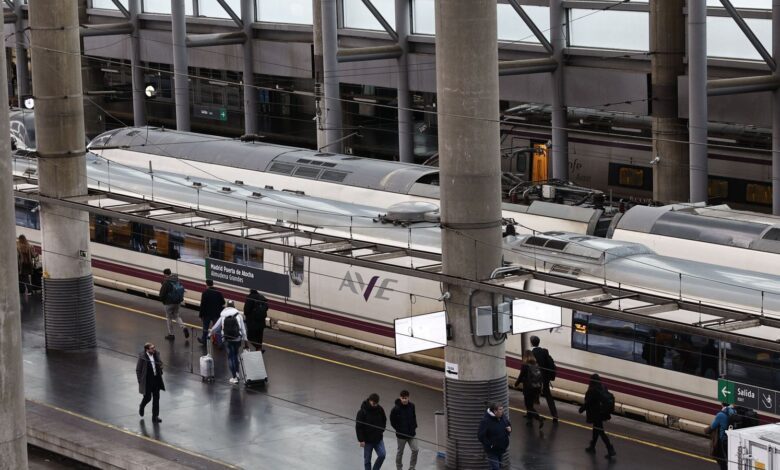
The restoration of high-speed rail service between Madrid and Andalusia has been a major development for the entire country. After an almost month-long suspension caused by a tragic incident near Adamuz (Adamuz, Córdoba), thousands of passengers can once again reach southern regions quickly. The decision to resume services was made after extensive restoration work was completed and official approval was granted by the infrastructure operator.
Starting today, regular AVE routes on the Madrid–Seville, Madrid–Cádiz, Madrid–Granada, and Madrid–Granada–Almería lines are returning to their standard schedules. For residents and visitors to Huelva, there’s a change: part of the journey to Córdoba will now be by train, followed by a transfer to a bus. A similar arrangement applies to passengers heading to Málaga — due to ongoing works on the line, the rail connection between Antequera and Málaga is temporarily replaced by bus service.
Aftermath of the accident
The large-scale changes were triggered by the disaster on January 18, when the last three cars of an Iryo train traveling the Málaga–Madrid route derailed. The collision with a passing Renfe train resulted in 46 deaths and dozens of injuries of varying severity. The investigation into the causes of the accident is ongoing, and public concern over rail safety has sharply increased.
Restoration work on the damaged section was complicated by adverse weather conditions and the need to coordinate actions with judicial authorities. Although the resumption of service was expected in early February, the process was delayed by almost a month. Authorities emphasize that passenger safety remained the top priority in decisions about resuming train operations.
Changes for passengers
Passengers planning trips to Huelva or Malaga should take into account new route arrangements. For Huelva, a bus transfer is required in Cordoba, and for Malaga—in Antequera. All other destinations are fully served by rail. The temporary inconveniences caused by these transfers have sparked discussion on social media and among representatives of the tourism industry.
At the same time, the return of high-speed trains to key routes is seen as an important step toward restoring transport stability in the region. Many residents of southern provinces note that the lack of direct service has negatively affected business activity and tourism. Now, a gradual return to the usual rhythm of life is expected.
Debates on safety
The tragedy in Adamuz sparked widespread discussion about the state of the railway infrastructure and measures to prevent similar incidents. Shortly after the accident, another incident occurred in Catalonia—a suburban train driver was killed in Barcelona—which further heightened public concern. These events triggered strikes by railway sector workers and demands from the public for authorities to tighten oversight and modernize safety systems.
Questions about the reliability of rail transport remain in the spotlight. Recalling how service between Málaga and Antequera was completely halted due to a landslide, it becomes clear that the infrastructure requires constant attention and investment. Each new incident prompts a review of standards and the implementation of modern technologies to prevent disasters.
In recent years, Spain has faced several major disruptions to its rail network. In addition to the Adamuz accident, Catalonia has repeatedly seen train stoppages due to technical failures and natural disasters. In 2024, a landslide near Álora also led to the complete suspension of high-speed trains in the south of the country. These cases have revealed how vulnerable the transport system is to both natural and man-made threats, and have underscored the importance of swift response to emergencies to minimize the impact on passengers and the economy.