This incident is significant for Spaniards, as it highlights the vulnerability of housing in rural Spain and the risks faced by those working in the energy sector. Several migrants employed in solar panel installations lost their homes, and one person died—the consequences for the region could impact both safety and housing issues. Local services faced complex rescue operations due to the old building’s structure and limited access.
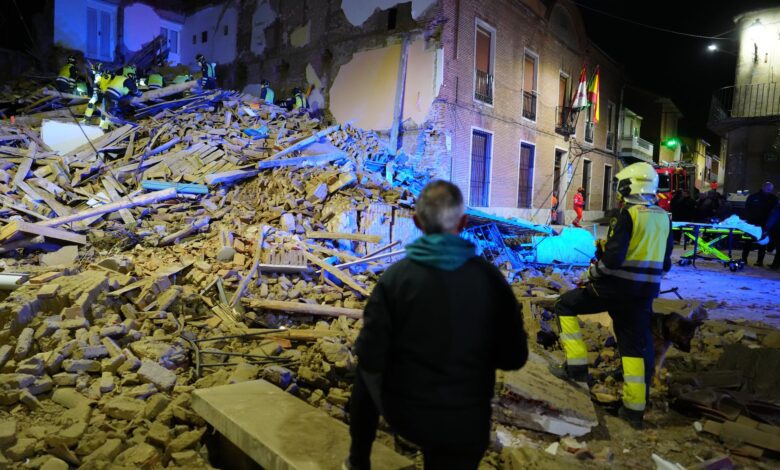
According to El País, the house adjacent to the town hall of the small village Siete Iglesias de Trabancos in Valladolid province began to crack on Sunday. Cracks and falling plaster grew worse, and on Tuesday evening the homeowner went upstairs to demand that the tenants leave immediately. However, the structure soon collapsed entirely, burying the area beneath a heap of bricks and adobe.
Five people lived in the house: a 79-year-old landlady and four workers from Latin America—three Bolivians and one Ecuadorian—who had come for temporary jobs installing solar panels. One resident left the building before the collapse and was able to tell rescuers who was inside. Three others either managed to escape on their own or were pulled out by emergency workers, sustaining only minor injuries.
Rescuers proceeded with caution: firefighters from the province and Civil Guard units with canine teams from Zamora arrived at the scene. It took several hours to secure access to the debris and extract the people trapped underneath. One of those arrested—a 27-year-old Bolivian woman—was found by rescuers with no signs of life. According to authorities, the rescue team had been in communication with her as they attempted to reach her location, but later discovered she had passed away.
The homeowner was pulled from the rubble after about four hours. The elderly woman was transported to the hospital on a stretcher with an IV; her condition is described as serious, but doctors say she has a chance of recovery. One of the residents spent about an hour to an hour and a half trapped before being reached by rescuers; he suffered only minor injuries and was released after receiving medical assistance.
Local authorities responded swiftly: the sub-delegate of the government in the province of Valladolid, Jacinto Canales, arrived in the area to coordinate the emergency response and inspect the scene. He commented on the scale of the destruction and outlined the measures being taken to assist the victims and ensure the safety of surrounding buildings, including the municipal building next to the collapse, which suffered only partial damage.
Investigators continue to examine the causes of the sudden collapse. Preliminary findings point to worn-out structures and repeated partial repairs of the old building, which were carried out without full reconstruction of the supporting elements. There is also an acute shortage of rental options in the village, which explains why workers had to settle in such a building, far from acceptable housing standards.
This case highlights the social and infrastructure risks facing rural Spain: a lack of rental housing forces seasonal and low-wage workers to choose cheap but unsafe accommodation. Regional authorities must inspect similar properties and propose solutions for temporary worker accommodation, as well as strengthen oversight of the local housing stock, especially in areas with booming renewable energy development.
In a separate note in regional media, another socially significant event was discussed: a RUSSPAIN feature on the death of a renowned chronicler of changing times, which demonstrated how news of tragedies continues to resonate with Spanish society.
Spain and local authorities are now focused on helping the victims and inspecting similar structures in neighboring areas. Safety assessments are underway for nearby buildings, along with an analysis of how to provide housing for solar industry workers who often arrive in rural communities with limited rental options.
Reference information: In recent years, Spain has seen cases of partial or complete collapses of old residential buildings, especially in depopulated areas with worn housing stock. Migrants and seasonal workers regularly face limited housing options. Civil protection agencies and building authorities are increasingly carrying out inspections and issuing orders to reinforce hazardous houses, but the problem remains pressing in regions with growing demand for labor in renewable energy projects.