A Sanctuary Amidst the Asphalt: How It All Began
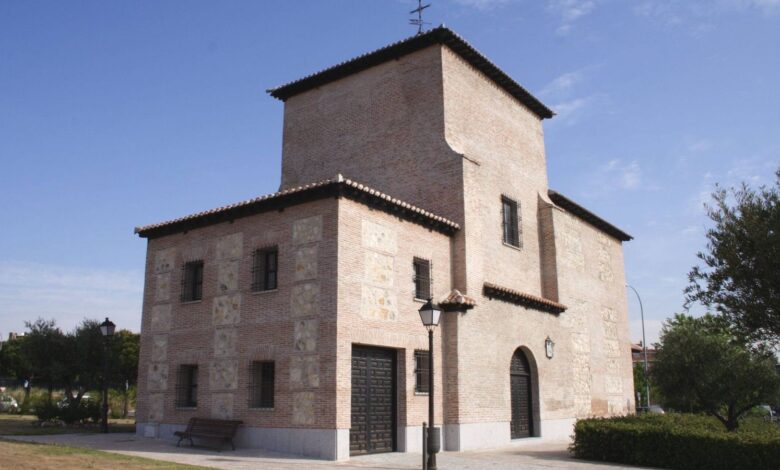
In the mid-17th century, on the outskirts of what was then the village of Barajas, a small chapel dedicated to the Virgin Mary of Sorrows (Nuestra Señora de la Soledad) appeared. Back then, no one could have imagined that centuries later, this place would find itself in the heart of a major transport intersection, where the noise of traffic never fades, day or night. Initially, the chapel was part of the rural landscape, serving as a landmark for travelers and a gathering place for locals during religious celebrations.
Over the years, the chapel became a kind of symbol marking the entrance to Barajas. Its architecture, typical of Castilian rural churches, stood out for its simplicity and solidity. Travelers often stopped here to pray for protection before setting out. Inside, elements of baroque decoration remain, while the exterior is marked by austere lines of brick walls with stone accents.
The City Expands, Roads Encroach
With the growth of Madrid—especially after the expansion of Barajas Airport—the transport infrastructure began to change rapidly. The old roads connecting Barajas to neighboring districts became overwhelmed. Authorities started considering the construction of new highways to ease traffic and provide quick access to the airport.
In the 1980s, there was even talk of demolishing the chapel to widen the road. However, protests from local residents prevented this plan from going ahead. As a result, the road was slightly rerouted, but the church was still cut off from its familiar urban surroundings. Later, in the 1990s, during the construction of the M-11 highway, designers faced another dilemma: either demolish the building or alter the route. They decided to build a tunnel beneath the chapel, and later constructed a large roundabout, placing the shrine at its very center.
An island of history amid a sea of traffic
Today, the chapel literally stands on a concrete slab above a busy road. Access is only possible via a pedestrian crossing, making it difficult for most residents to visit. All around are the noise of traffic and the smell of exhaust. While a small green zone remains near the church, it’s not easy to reach.
Despite its isolation, the church is still in service. Services are held here on Sundays, and inside, an old altar with images of the Virgin Mary, Jesus, and Saint Rita has been preserved. However, constant exposure to pollution and vibrations from traffic threatens the building’s integrity. Experts note that such proximity to roads is having a negative impact on the condition of the monument.
A dilemma between past and present
The situation with the chapel in Barajas has become a vivid example of how modern infrastructure projects can push historical landmarks to the sidelines. Local architects believe that the planning of new roads does not always take into account the interests of pedestrians and the preservation of cultural heritage. As a result, the church has become isolated from the city, both physically and symbolically.
The future of the chapel remains uncertain. In nearly four centuries of existence, it has witnessed many changes, but has never been so isolated before. Today, it is more than just an architectural monument—it serves as a reminder of how easily our connection to history can be lost in the name of transport convenience.