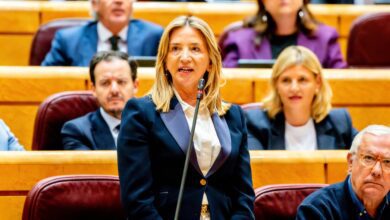
In recent years, Spain’s political scene has undergone significant changes. The spotlight is now not only on the rivalry between parties, but also on competition within them. This is especially evident in the confrontation between Isabel Díaz Ayuso, who leads Madrid, and Alberto Núñez Feijóo, the leader of the Partido Popular. Ayuso, leveraging international connections, is steadily expanding her influence, and her trips and meetings with world leaders are discussed not only in Spain but also abroad.
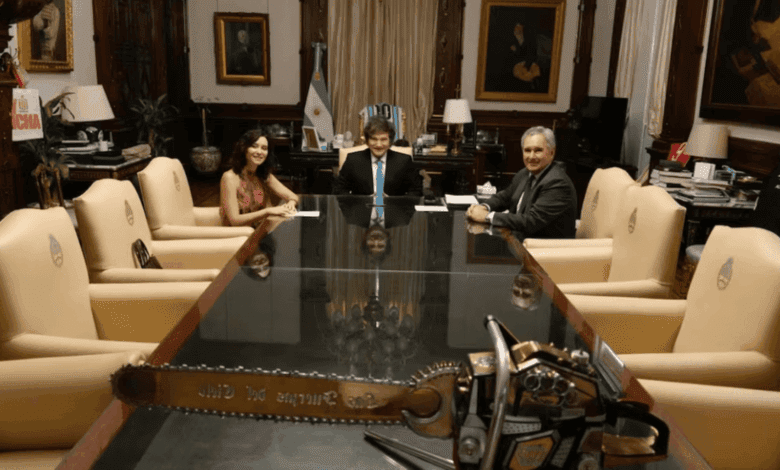
Her office features unusual details, such as a decorative chainsaw inscribed with “Las fuerzas del cielo” (The forces of heaven). This item became a symbol of her meeting with Argentina’s president Javier Milei. But such elements are just the tip of the iceberg. Behind them lies a carefully crafted strategy where foreign policy serves as a tool for domestic leadership.
External direction
Since taking office in August 2019, Ayuso has not confined herself to regional governance. She has turned Madrid into a hub for international meetings, hosting presidents of Ecuador, Colombia, and figures such as Juan Guaidó. Her schedule is packed with regular visits to the United States, Israel, France, Germany, Portugal, Argentina, South Korea, and other countries. These are more than just protocol trips: each one is part of a bigger game in which Madrid is becoming a magnet for investors and politicians from around the world.
Unlike other regional leaders, Ayuso relies on personal connections with like-minded figures. Meetings with Donald Trump or Milei are no coincidence—they are deliberate choices. She aims to be the voice of liberal and conservative forces searching for new direction in Europe. This strategy helps her not only strengthen her position in Spain, but also compete with parties like Vox, which traditionally take a harder line on the right wing.
Internal party rivalry
While Feijóo is focused on opposing Pedro Sánchez’s government in parliament, his international activity remains limited. He meets with European leaders, but these events rarely make headlines in Spanish media. Against this backdrop, Ayuso manages to capture attention not only from the public, but also from fellow party members. Her approach is not just an extension of the party agenda, but a standalone project that sometimes even overshadows the initiatives of the central leadership.
Political analysts point out that Ayuso deliberately takes strong ideological stances to distinguish herself from competitors. She is unafraid to take risks by openly supporting controversial figures and ideas. This allows her to rally supporters seeking an alternative to the traditional party line. As a result, Madrid is becoming not just an administrative hub, but a symbol of a new political style.
International resonance
Ayuso’s activity on the global stage is attracting the attention of not only Spanish but also international observers. Her meetings with the ambassadors of the United States, Japan, the United Kingdom, Italy, and Israel highlight that Madrid is not just a region, but a key player in both the European and global arenas. While other regional leaders tend to focus on local issues, Ayuso is building a network of contacts that could prove valuable if she decides to pursue a national role in the future.
In this context, it’s clear why her strategy is causing irritation among some of her party colleagues. She is not only strengthening Madrid’s position but also changing the rules of the game for the entire political class. Her example shows that a regional leader can become a national figure by skillfully leveraging foreign policy resources.
Leadership and Ambition
Within the party, questions are being raised more and more often: can Feijóo maintain his leadership if Ayuso continues to gain ground internationally? Some analysts believe she is waiting for the central leadership to weaken to step into the spotlight. Her ambitions are not limited to Madrid—she is clearly ready for more.
However, as long as Feijóo maintains control over the party apparatus, Ayuso has to act cautiously. Yet her successes on the national stage have already shifted the balance of power within the Partido Popular. Madrid is becoming not only the economic but also the political center of the country, and Ayuso has emerged as a symbol of a new generation of leaders who are not afraid to break with tradition.