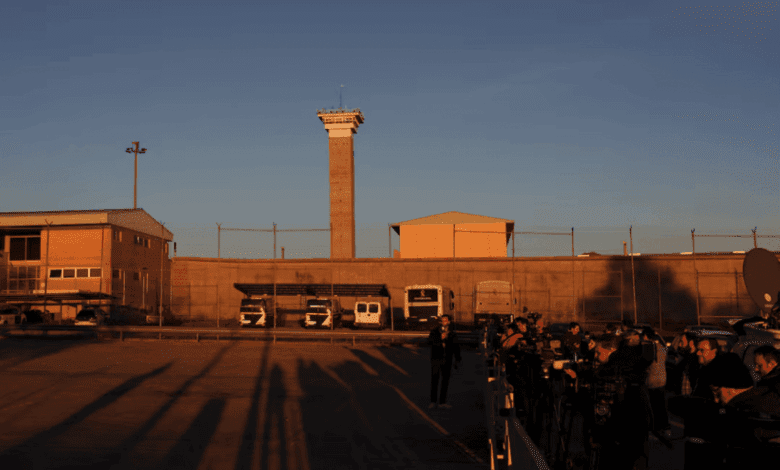
On Friday morning, former minister José Luis Ábalos woke up for the first time not in his own home, but in a prison cell at the Centro Penitenciario Madrid V in Soto del Real. Sharing the same small 10-square-meter room with him was his former adviser, Koldo García. Both had just spent their first 12 hours in custody after Supreme Court Judge Leopoldo Torres ordered their detention, citing the prosecution’s assessment of an ‘extreme’ flight risk.
Just yesterday, Ábalos was working in his office in Congress, but today his routine is dictated entirely by strict prison rules. He now shares his space with his former aide, and the only view from their cell window is a mountain range behind bars. The familiar freedom to organize his own day is gone. Now, every step and every action is regulated by the institution’s internal schedule.
Daily Routine and New Rules
The first thing newcomers encounter is a strict schedule. Wake-up is around eight in the morning, followed by a mandatory headcount and personal hygiene. Breakfast begins at nine, after which there is time before lunch for various activities: walks, visits to the library, or participation in courses or workshops. Lunch is strictly at 1:15 p.m., followed by rest in the cell or continuing activities. In the evening, dinner is served at 7:30 p.m., after which the cell doors are locked and silence sets in. Watching TV or listening to the radio is allowed until 11:00 p.m., but after that, total silence is required.
The cafeteria menu is modest, with the cost of meals per inmate not exceeding four euros a day. There is no choice of dishes, and meals are served strictly according to schedule. Unlike his previous life, when Ábalos could meet with loved ones at any time, now visits are limited in both time and number. No more than two 20-minute visits are allowed per week, which can be combined into a single 40-minute visit on weekends. Up to four people can attend a visit.
Restrictions and daily life details
Contact with the outside world is now also under control. Inmates are allowed up to ten phone calls per week, each lasting no more than five minutes. To do this, a list of phone numbers must be provided in advance and approved by the administration. All calls are paid for by the inmates themselves, and cash is prohibited in the facility—a special internal card is used, which can be credited with no more than 100 euros per week.
Letters can be sent and received without restriction, both within the country and abroad. However, parcels are only permitted twice a month and only on visiting days. They must not contain prohibited items, such as mobile phones. Upon admission to the facility, each inmate is issued a set of clothing, hygiene items, and bedding, although personal belongings may also be used.
Rights, responsibilities, and regime specifics
All new inmates receive a brochure titled ‘Prison Step by Step’ (La prisión, paso a paso), which explains their rights and responsibilities in detail. Despite being deprived of freedom, their basic rights remain protected: the administration is obliged to ensure the life, health, and safety of all prisoners. High-profile individuals, such as Ábalos and his adviser, are placed under special supervision to prevent conflicts and incidents.
Among their duties are following internal regulations, respecting other inmates and staff, and maintaining cleanliness and personal hygiene. The consumption of alcohol and drugs is prohibited, as are insulting or degrading others or violating administrative orders. Serious infractions can lead to sanctions, such as restricted visitation rights or up to two weeks of solitary confinement.
Status specifics and living conditions
While Ábalos and García remain in pre-trial detention, they are not allowed extended leave outside the facility. However, family visits with physical contact are permitted at least once a month, lasting from one to three hours. Additionally, monthly intimate visits with a partner are allowed.
Meetings with lawyers take place without partitions, and since 2024 attorneys have been permitted to bring laptops and tablets, although their use is strictly regulated. Upon admission, each inmate is assigned a unique identification number that will remain with them for life. In the case of Ábalos and his adviser, the first four digits of this number are 2025, marking the year of their initial incarceration.