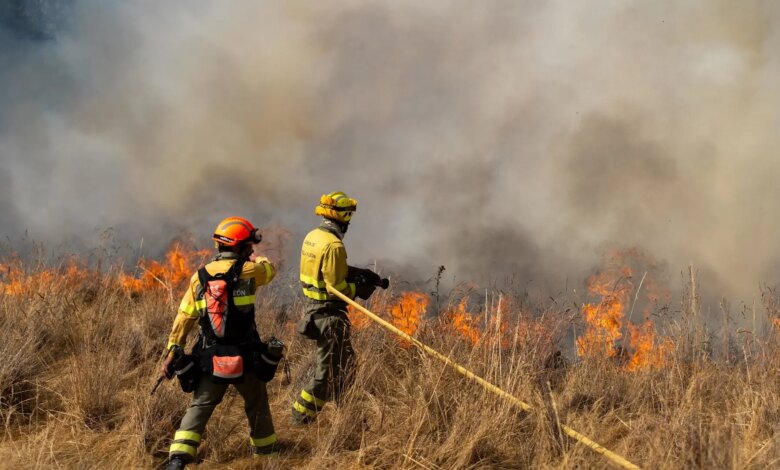
In recent weeks, Spain has been facing a series of major wildfires affecting large areas in Galicia, Cádiz, Castilla y León, and Castilla-La Mancha. Thousands of residents have been evacuated as a result of the fires, which have caused damage not only to the environment but also to infrastructure.
In such circumstances, the national emergency response system — the Civil Protection Plan — becomes a key tool for coordinating the actions of all services and agencies. This plan outlines how and in what order to respond to threats, aiming to minimize the impact on people and the environment.
The main objective of the plan is to unite the efforts of all available resources: from firefighters and police to military units and medical services. It clearly defines responsibilities, details which resources are mobilized, and establishes cooperation between different levels of government.
The plan covers a wide range of risks: from natural disasters such as floods, hurricanes, and fires to industrial accidents, transportation incidents, and even sanitary or chemical threats. For each type of threat, there are specific protocols, evacuation routes, and measures to protect the population.
Before the plan is launched, a risk assessment is carried out for the specific area, identifying the most likely threats and vulnerable zones. Based on this data, the response structure is formed, divided into several phases — from early warning to full recovery after an emergency.
Pre-emergency phase
This phase begins when a threat emerges but no direct damage has occurred yet. For example, there is a high probability of a severe thunderstorm, a small forest fire has started, or a leak is detected at an industrial site. At this stage, authorities increase monitoring, collect data, and prepare resources for possible deployment. Preventive warnings may be issued to the public to alert them to potential danger without causing panic.
If the threat spreads nationwide, the Ministry of the Interior may declare a national pre-emergency regime. This enables the early mobilization of state forces, such as the military or aviation, and strengthens oversight of the situation across different regions.
Emergency phase
When a threat becomes reality and causes harm to people, infrastructure, or the environment, an emergency regime is declared. This marks the start of the active response phase, and all services shift to operations aimed at minimizing the consequences. Depending on the scale of the disaster, there are three levels:
Level 0 — the situation is managed by local services. The municipality is responsible, with city fire departments, police, and medical teams involved in the response.
Level 1 — dealing with the emergency requires the involvement of additional resources from neighboring municipalities or regional bodies. The operation is coordinated by the authorities of the autonomous community, with regional firefighters, police, and medical services joining the response. At times, support from national forces may also be requested at this stage.
Level 2 — the situation exceeds the region’s capabilities and requires state intervention. The Ministry of the Interior takes command of the operation, with military forces, aviation, and major logistics units deployed. If necessary, the European Union Civil Protection Mechanism may also be activated to provide international assistance.
Currently, the most difficult situation persists in Castilla y León, where several fires have reached the second level of danger, resulting in mass evacuations and the mobilization of all available resources.
Recovery phase
Once the main threats are eliminated, the process of returning to normal life begins. During this period, electricity, water supply, transport, and communications are restored, roads and buildings are repaired, and the delivery of food and medicines is ensured. At the same time, damage assessments are carried out, compensation and aid programs for those affected are developed, and the response of all services is analyzed to improve future effectiveness.
Thus, the national civil protection plan in Spain is not just a formality but a well-structured system that enables a swift response to any threats and ensures the safety of the population even under the most challenging conditions.