In recent years, Spain has seen a sharp increase in the trade of counterfeit goods, especially sports shoes and clothing. Young people are increasingly buying fake sneakers and T-shirts through online stores and social media, where bloggers and influencers actively promote such purchases. Unboxing videos featuring fakes rack up thousands of views, with users exchanging secret links and order codes in the comments.
Behind this seemingly harmless hobby are well-organized criminal groups. According to the National Police’s Industrial Property Rights Violation Unit, criminals use online platforms and social networks to quickly advertise and sell counterfeits without ever coming into direct contact with the products. This approach lets them minimize risks and maximize profits.
One striking example involves three young people from an affluent neighborhood in Madrid who made more than two million euros in a year by selling collectible counterfeit sneakers online. They set prices below those of the originals to avoid drawing attention and used a dropshipping scheme: goods were shipped directly to clients from China, while a fictitious cotton T-shirt sales company was created to legitimize the income.
Product counterfeiting remains one of the most profitable and relatively low-risk types of crime. Depending on the scale, offenders face sentences ranging from six months to four years, and in the presence of other criminal episodes—more serious charges, including participation in a criminal group and money laundering.
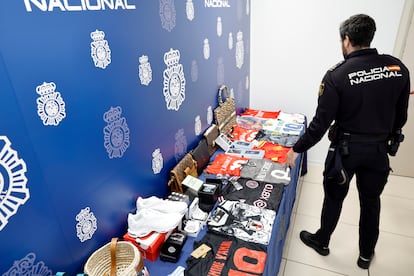
In 2024, police carried out a large-scale operation against a network producing counterfeit sneakers in Portugal and selling them through Spanish websites. During the raids, 20 tons of sports goods from well-known brands were seized, with total damages estimated at over 20 million euros. Six people were arrested in Spain and another ten in Portugal, and eight underground factories were uncovered.
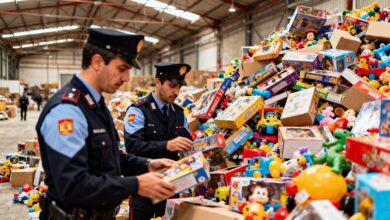
The main demand for counterfeits is focused on sports goods—sneakers and T-shirts make up the bulk of the 200 tons of counterfeit products seized annually. However, the market is not limited to the internet: in summer, at the height of the tourist season, street vendors—mainly from Senegal—become more active at coastal resorts, offering fake bags and accessories. As Christmas approaches, counterfeit toys start appearing on the market.
According to official statistics, in 2023 Spanish law enforcement seized more than 3.6 million counterfeit goods worth 149 million euros. Textile products are in the lead (62% of the total volume), followed by toys, leather goods, and shoes.
The police are actively cooperating with manufacturers and international partners, including those from China and Turkey, to identify new schemes and prevent counterfeits from entering legitimate retail networks. Companies report suspicious changes in sales, which helps respond quickly to threats.
Experts note that the infiltration of counterfeits into official distribution channels harms not only brands but also consumers, who lose guarantees of quality. Spain ranks second in the European Union in terms of counterfeit trade volume, with annual economic losses estimated at €5.7 billion and nearly 45,000 jobs.
The Brand Protection Association (ANDEMA) emphasizes that today’s buyers of counterfeits are mainly young people under 35, focused on outward appearances and social influence. For them, functionality is less important than being associated with a fashionable brand, even if the product is just a visual copy of the original.
Police advise paying close attention to details when making purchases: counterfeits can often be identified by minor mistakes in logos, colors, or quality. The seized goods include not only clothing and footwear, but also accessories, cosmetics, electronics, and even food products.