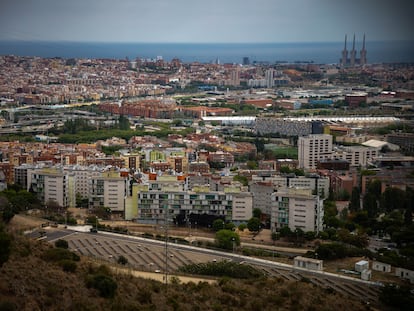
Authorities of the Barcelona Metropolitan Area (Área Metropolitana de Barcelona, AMB) have made a decision that will affect tens of thousands of property owners. Starting in 2026, owners of apartments, parking spaces, and rural plots with a cadastral value below €49,200 will have to pay a mandatory annual fee. On average, the amount will be €17.5, and it will be automatically included in the property tax (IBI) bill.
The largest number of new payers will be in Barcelona itself and neighboring L’Hospitalet de Llobregat, where the change will impact more than 110,000 properties. In the Catalan capital, the average fee will be €17.68, with a similar amount in L’Hospitalet. In other cities such as Santa Coloma de Gramenet, Badalona, El Prat de Llobregat, and Cornellà de Llobregat, tens of thousands more people will join the ranks of new taxpayers.
Who will have to pay, and how much?
The change will be particularly noticeable for residents of Badia del Vallès, where three-quarters of all homeowners will receive this bill for the first time. Here, the average payment will be slightly lower — €13.75. Across the metropolitan area, the changes will affect 240,000 properties that were previously exempt from this tax.
Previously, owners of inexpensive apartments and small properties enjoyed tax breaks, but courts have now ruled such practices unfair. Following a series of court rulings, AMB was forced to revise its rules and abolish bonuses for owners of properties with low cadastral value. Now, all categories of owners will pay a single rate — 0.045% of the cadastral value.
Why were the rules changed and what will happen to the budget?
The changes were prompted by lawsuits from major energy companies, which considered the previous system discriminatory. Previously, businesses paid a higher rate, while individuals were often exempt from the fee entirely. After court decisions, including from the Supreme Court, AMB had to level the playing field for everyone.
As a result, the agglomeration’s budget will lose nearly 40 million euros a year. Revenue from major infrastructure sites—such as ports, airports, and power plants—will be particularly affected. For instance, the airport in El Prat de Llobregat will now generate four times less revenue for the treasury than before. Meanwhile, most of the burden will shift to the residential sector: owners of apartments and houses will contribute over 60 million euros in revenue, while commercial properties will add another 31 million.
What does this mean for residents and municipalities?
For most homeowners, the new levy won’t make a significant dent in their budget, as the amount is relatively small and will be included in the regular IBI bill. However, for municipalities—especially those with lower-income populations—it may become an extra burden. AMB authorities have already warned of the need to adjust next year’s budget to make up for lost revenue from large companies.
Thus, from 2026, the property tax system in Barcelona and its suburbs will become more balanced, but not without budget losses and new expenses for residents.