In Jumilla (Murcia), the municipality’s decision to ban religious events in sports halls sent a clear signal to all of Spain. Local Muslims, deprived of their usual space for prayer, were forced to seek alternatives. This event not only changed traditional celebrations but also highlighted how pressing the issues of integration and respect for cultural traditions are in the country’s small towns.
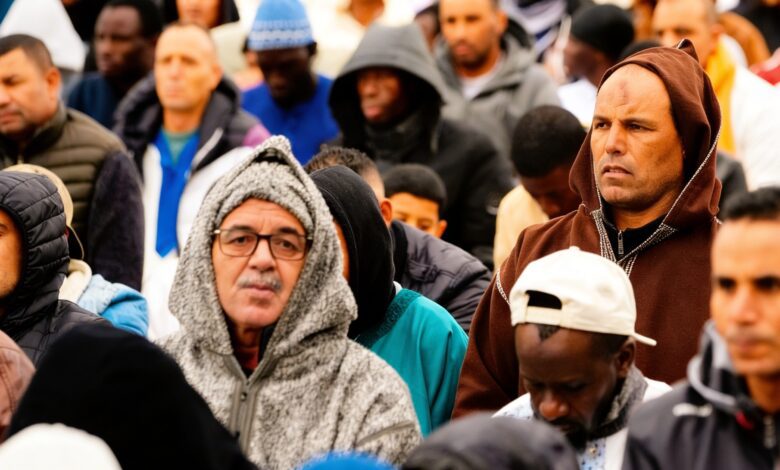
On Friday morning, around 1,500 Jumilla residents gathered in a public parking lot to mark the end of Ramadan. Organization began long before sunrise: young volunteers prepared the area, handed out vests, and police monitored order. According to El Pais, the decision to move the prayer followed lengthy negotiations between the Muslim community and local authorities. The authorities offered the parking lot as a compromise to avoid further conflict and prevent another wave of discontent.
The ban and its consequences
It all began with an initiative from Vox, modified and supported by the Partido Popular, which limited the use of municipal sports facilities for non-sporting events. This decision, made amid growing anti-Islamic sentiment, caused a stir not only in Jumilla but also in other towns in Murcia. As El Pais noted, similar measures had already been implemented in Torre Pacheco, where religious celebrations also sparked disputes.
As a result, the Muslim community of Jumilla found themselves unable to access their usual place of worship. Despite attempts to challenge the decision in court, the authorities maintained the ban. Ultimately, the holiday was celebrated in an open area, which presented a new challenge for local residents. Many acknowledged that the conditions were far from ideal, but there was no other choice.
Public response
The event was attended by representatives of PSOE and Izquierda Unida, who expressed support for the Muslim community. According to them, the current situation was the result of political decisions that failed to consider the interests of all city residents. Some participants noted that, for the first time in a long while, they felt uncomfortable conducting a religious ritual in full view of the entire city. Nevertheless, there were no incidents reported, and police ensured security throughout the event.
After the prayer, organizers and volunteers cleaned the area, and participants shared traditional treats. According to russpain.com, such cases are becoming more common in Spain, where issues of religious identity and public space are gaining special significance. It is worth noting that, despite concerns, the event proceeded peacefully, and the residents of Jumilla demonstrated restraint and mutual respect.
Context and new challenges
Moving religious events to more open and central locations in the city became an unexpected consequence of the ban. This not only changed the format of the celebration, but also influenced how other residents perceive it. Some feared possible provocations, especially among young people, yet the atmosphere remained peaceful. It is important to note that such decisions may affect how religious holidays are organized in other regions of the country in the future.
In recent years, Spain has seen a rise in conflicts over the use of public spaces for religious purposes. For example, there was a recent debate in Jaén regarding the fate of a historic bridge threatened by flooding— details about how local authorities respond to such challenges show that questions of access to public facilities are becoming increasingly pressing.
Reference data indicate that in recent years Spain has seen more cases where religious communities face restrictions on holding their events in usual locations. Disputes have also arisen in Madrid and Barcelona over the use of municipal facilities for festivals and rites. In some cases, authorities have sought compromise by providing alternative venues, but not all parties have always been satisfied. Such situations highlight the need to find a balance between the interests of different population groups and maintaining public order.