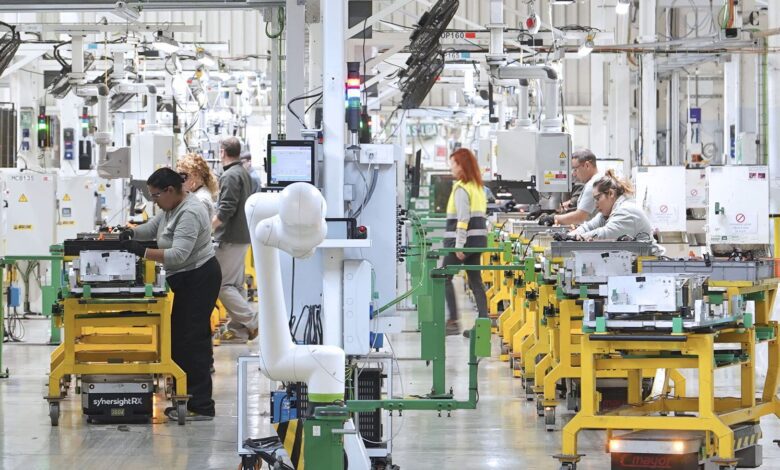
In 2025, Castilla y León found itself in the spotlight thanks to an impressive surge in industrial production. This result not only strengthened the region’s position on Spain’s economic map, but also sent a signal to other autonomous communities where the dynamics were less optimistic. At a time when national figures showed only modest growth, such a remarkable leap in one of the country’s largest regions may influence how investments are allocated and drive strategic business decisions.
Castilla y León’s industrial sector closed the year with a 6.2% increase—almost five times higher than the Spanish average. By comparison, the nationwide growth was just 1.3%. Such a gap between a region and the national trend is rare and highlights the uniqueness of this situation. Notably, this was the second-highest result among all autonomous communities, surpassed only by Andalucía, where industry grew by 8.8%.
Regional contrasts
While Castilla y León and Andalucía showed steady growth, not all regions managed to stay afloat. In Navarra, industrial production fell by 2.6%, marking the most significant drop among the autonomous communities. Meanwhile, Madrid and Extremadura saw virtually no change, underscoring the varying degrees of economic resilience across different parts of the country.
A total of ten autonomous communities in Spain ended 2025 with positive industrial growth. Five regions experienced a decline in production, while two others—Madrid and Extremadura—saw no significant change. This divergence in results highlights just how uneven industrial development is across Spain.
National context
Looking at the country as a whole, industrial production growth in 2025 was the highest since 2022. Back then, the figure rose by 2.3%, but it still falls short of the record leap in 2021, when growth reached 7.1%. It’s worth noting that 2021 was unique due to the post-pandemic recovery and the lifting of restrictions, which explains the exceptionally high rates.
In December 2025, industrial production in Castilla y León surged by 24.8% compared to the same month of the previous year. This was the highest increase among all regions in Spain. By comparison, the national growth rate for December was 2.8%, six tenths of a point higher than in November. Eight autonomous communities posted growth in December, while nine saw declines, further highlighting the differences in economic dynamics between regions.
Economic impact
Such significant industrial growth in Castilla y León could become a driving force for other sectors of the region’s economy. Increased production typically leads to the creation of new jobs, higher tax revenues, and enhanced investment appeal. For local businesses, this is an opportunity to expand their sales markets and strengthen their positions both domestically and internationally.
At the same time, regions with negative trends, such as Navarra, may face the need to revise their economic policies and look for new growth opportunities. Differences in development rates between autonomous communities could shift the economic balance of the country and influence the allocation of state resources.
Industrial trends
In recent years, industrial production in Spain has shown a fluctuating pattern. After a sharp drop in 2020 caused by the pandemic, 2021 saw rapid growth. However, in 2022 and 2023, the pace slowed down, and in 2024 the increase was only 0.7%. Against this background, the 2025 results look particularly striking for certain regions.
Industry is traditionally considered one of the key sectors of the Spanish economy, providing employment and export revenue. Different regions have led growth at various times, depending on the structure of production, investment levels, and access to raw materials. In 2025, Castilla y León and Andalucía emerged as frontrunners, while other regions faced challenges.
Looking back at recent events, it’s worth noting that a similar surge was observed in Catalonia in 2022, where industry expanded as the region recovered from lockdowns. In 2023, Valencia drew attention when the launch of new production lines boosted its regional economy. These fluctuations highlight the sector’s sensitivity to both internal and external factors, as well as the importance of flexible local economic policies.