Political divisions have flared up again in Catalonia, directly impacting resource allocation and the future of autonomy. Esquerra Republicana de Catalunya (ERC)’s decision to abandon the budget project and shift to temporary financial measures has sparked a wave of discussion among locals. For many, this move signaled possible changes in governance and raised concerns about how internal disputes could affect Catalonia’s stability.
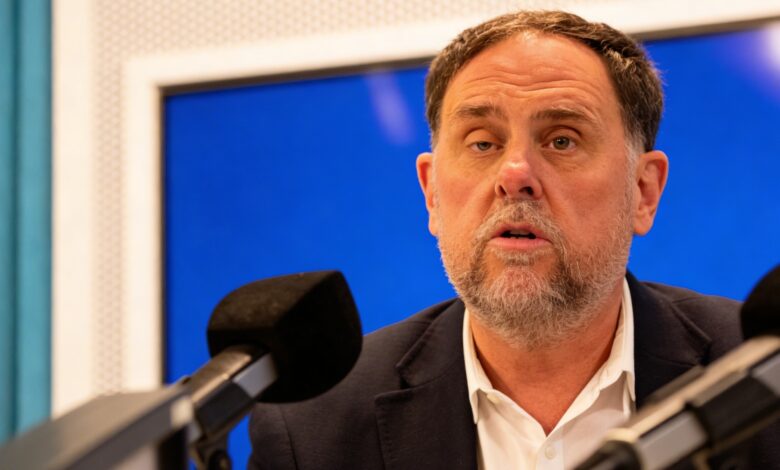
Oriol Junqueras, leader of ERC, has become the focus of attention and openly expresses his confidence in his party’s stability. Despite rumors that Gabriel Rufián might join a new left-wing coalition, Junqueras stresses that ERC’s history and values surpass individual personalities. According to El Pais, the republican leader recalled the party’s near-century history and its role in shaping Catalan identity. He believes that even if certain figures leave, it will not alter the movement’s strategy.
Budget debate
The budget issue has become central to political discussions in recent weeks. After ERC and the Catalan government failed to agree on reallocating part of tax revenues, a decision was made to temporarily forgo a full budget. Instead, an additional €6 billion credit was approved to keep regional institutions running. Junqueras notes that such measures secure funding, but do not resolve the main problem— the limited fiscal powers of the autonomy.
According to El Pais, negotiations with the central government and PSC are ongoing, but have so far yielded little progress. Junqueras has openly stated that the main obstacle is existing legislation prohibiting the transfer of the IRPF (personal income tax) to the autonomous level. He insists on the need to change this system so that Catalonia can independently manage its resources. At the same time, the ERC leader shows a willingness to compromise if alternative solutions offering equal effectiveness are proposed.
The role of Rufián and new coalitions
Alongside the budget disputes, there are discussions about Gabriel Rufián’s possible participation in a new left-wing coalition, which he plans to present jointly with Irene Montero. Junqueras, despite maintaining friendly relations with Rufián, emphasizes that personal initiatives should not overshadow the collective interests of the party. He is convinced that ERC remains the primary bearer of Catalonia’s democratic and independence values. According to russpain.com, such internal disagreements have already led to tension among Spain’s left-wing parties, as reflected in reports on leadership struggles and disagreements over timing.
Junqueras also criticizes the actions of the PSC, accusing the socialists of failing to fulfill budget agreements. He considers it a mistake to exert pressure through threats of early elections, as such steps, in his view, are not supported by either politicians or the public. At the same time, ERC is not closing the door to further negotiations but emphasizes that concessions are possible only if there are real guarantees of change.
Outlook and challenges
The situation surrounding the budget and possible coalitions highlights the complexity of Catalonia’s political landscape. Internal disagreements, the struggle for control over finances, and the search for new alliances create an atmosphere of uncertainty. For residents of the region, this means the coming months may bring decisions that will affect the distribution of resources and political stability.
As noted by El Pais, ERC continues to insist on the need to reform the financing system so that Catalonia can manage its revenues more effectively. At the same time, the party faces challenges both within its own ranks and from the opposition. Whether a compromise can be reached and unity preserved remains an open question.
In recent years, Catalonia has repeatedly become the scene of intense political conflicts over the budget and the distribution of tax revenues. In 2024, a similar situation led to prolonged negotiations between regional and central authorities, affecting the funding of social programs and infrastructure projects. Then, as now, the key issue remained the region’s ability to independently manage its own revenue. Such disputes often result in the revision of coalition agreements and the emergence of new political alliances, making the region’s political life especially dynamic.