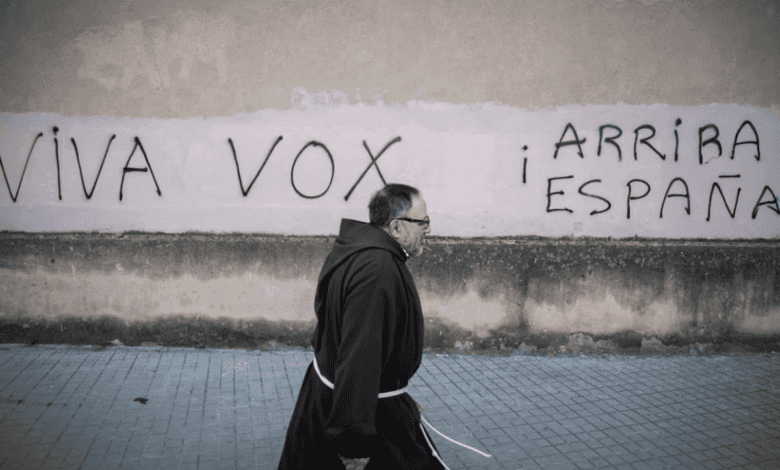
Spain is facing a crisis that could shift the balance of power within the Catholic Church and influence the national mood. For the first time in many years, ultraconservative circles have openly turned against the church leadership, accusing it of betraying traditional values. The trigger was the bishops’ support for the legalization of migrants and new agreements with the government, sparking outrage among the most radical members of the clergy and their followers.
A video showing the head of the Spanish Episcopal Conference (Conferencia Episcopal Española, CEE), Archbishop Luis Argüello, welcoming the government’s decision to legalize migrants on a large scale, became the starting point for open confrontation. The initiative, backed by hundreds of organizations and hundreds of thousands of citizens, drew a sharp reaction from some clergy members, who until now had limited themselves to cautious criticism.
Escalating tensions
Francisco J. Delgado, a priest from the Archdiocese of Toledo known for his ultraconservative views, publicly accused church leaders of betrayal. Other members of the radical wing supported his stance and no longer hold back in their criticism, calling the bishops’ actions “flirting with the devil.” Their rhetoric now includes accusations that the church is allegedly involved in a “state operation” to change the country’s demographic makeup and destabilize society.
Far-right political forces, including the parties Vox and Falange Española de las JONS, have also joined the protests. They claim that the church is more concerned with political interests than with protecting the poor and traditional values. In response, representatives of the episcopate stated that such a division of the church into ‘the people’ and ‘the hierarchy’ is reminiscent of totalitarian methods and leads to dangerous polarization.
Political consequences
The influence of the bishops on politics has noticeably weakened. Even the conservative Partido Popular has toughened its stance on migration issues, distancing itself from church initiatives. Against this backdrop, Vox has strengthened its position among Catholics, especially after the church publicly supported the Muslim community in Jumilla, which sparked a new wave of discontent among the far right.
Some bishops, such as the Archbishop of Oviedo, Jesús Sanz, have also expressed doubts about the advisability of the migration reform and the new agreements with the authorities. Their statements are increasingly in line with the rhetoric of radical politicians, which only deepens the internal divide.
Pressure and protests
Ultra-conservative organizations have intensified their campaign against the leadership of the CEE, especially after the decision to rethink the symbolism of Valle de los Caídos. Demonstrations in defense of the cross and in support of those bishops who share their views are taking place on social networks and in the streets. The protests are becoming more visible, and the demands on the church leadership are getting tougher.
Tensions are rising within the CEE itself. The current leadership has taken a hardline stance toward the socialist government, demanding early elections and refusing to compromise on issues of migration and social reform. However, pressure from radicals and external political forces continues to intensify, threatening the unity of the church.
Context and Parallels
In recent years, Spain has already faced sharp conflicts between the church and the state, especially amid reforms affecting minority rights and historical memory. Such disagreements have repeatedly led to mass protests and stark polarization of society. In 2024, for example, the debate over sex education legislation provoked a wave of discontent among conservatives, while in 2025, disputes over the restoration of monuments from the Franco era once again divided the public. Each time, the church has found itself at the heart of political battles, and the current crisis only reaffirms that its role in public life remains the subject of heated debate.