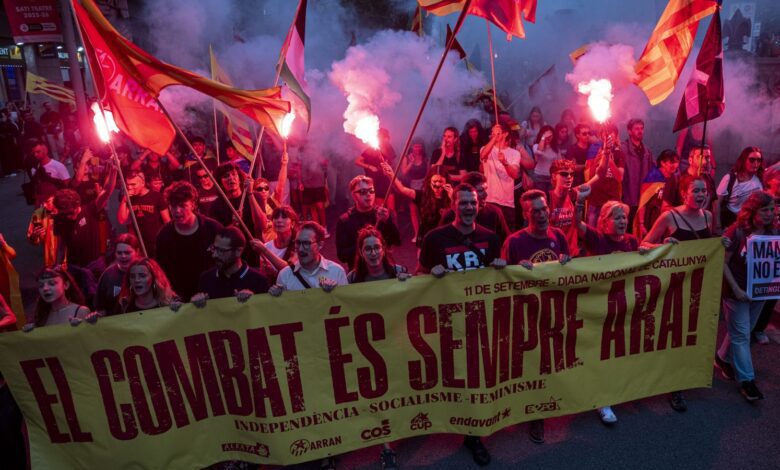
Catalonia’s independence movement stands on the brink of change. The emergence of the party Aliança Catalana (AC) and its leader Silvia Orriols has brought a noticeable shift to the region’s political landscape. Traditional forces like CUP now face new challenges that call established strategies and principles into question.
The rise of radical ideas
In recent months, groups in Catalonia with more hardline and exclusive views on independence have been gaining ground. Whereas such ideas were once associated only with right-wing movements, they are now starting to influence the rhetoric of radical left factions as well. Within CUP, there are ongoing discussions about the need to recognize these trends in order to maintain influence among pro-independence supporters.
Internal CUP documents point out that the rising popularity of AC and its culturally-identitarian slogans is prompting the left wing to look for new forms of cooperation. At the same time, the party stresses that a shift toward a national movement is not automatic—this requires deliberate outreach to different groups, including those with more radical positions.
Seeking new allies and broadening horizons
Amid growing polarization, the CUP is betting on expanding alliances beyond traditional political boundaries. For the first time in its official documents, the party acknowledges that achieving its goals requires stepping outside the ‘comfort zone’ and working together with representatives of other movements—from feminist to environmental and social initiatives.
Special attention is paid to involving migrants, who are becoming increasingly active in Catalonia’s political life. The CUP sees this as an opportunity to build a broad front that reflects the diversity of contemporary Catalan society. This approach should help counter the influence of the right and strengthen the left’s position in the struggle for independence.
Challenges and contradictions within the movement
Despite its drive for unity, the CUP emphasizes that it does not intend to align itself with right-wing radicals. The party admits that some independence supporters hold exclusionary views, but sees its mission as preventing those views from dominating. Instead, the CUP proposes to integrate these groups into a broader left-wing context and neutralize their influence.
A lively debate is underway within the movement about how to maintain unity given such divergent views on Catalonia’s future. The CUP does not expect to create a single bloc, but aims to strengthen the position and influence of anti-capitalist forces. Striking a balance between radicalization and openness to new partners becomes a crucial challenge.
Strategy for the Future: New Forms of Struggle
In the near future, CUP plans to hold a series of events aimed at developing a new political platform. At the end of November, the central event of the ‘Step Forward’ campaign will take place, where key proposals for the ongoing fight for independence and a reevaluation of the left’s role in this process will be presented.
The party emphasizes the need to adapt to changing circumstances and to be ready to cooperate with a wide range of groups. CUP believes this is the only way to create conditions for a real political breakthrough and to shift the balance of power in Catalonia.
Prospects and Possible Scenarios
The Catalan independence movement faces a difficult choice. On one hand, the influence of radical and exclusionary ideas is growing; on the other, there is increasing pressure to unite and seek new allies. CUP is trying to strike a balance between these trends in order to remain relevant and maintain its leadership among independence supporters.
In the coming months, it will become clear whether the radical left can bring new groups into the fold and retain control over the movement. In any case, Catalonia’s political landscape has already changed, and ahead lies a period of new alliances, unexpected coalitions, and the battle for influence.