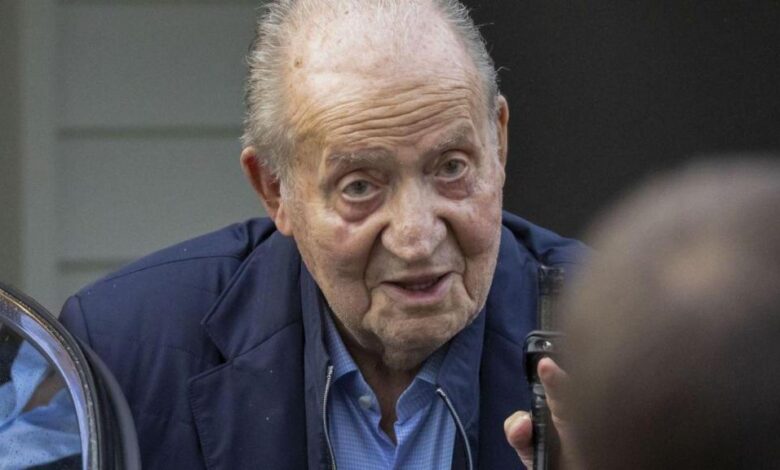
The issue of former King Juan Carlos I’s return to Spain has come back into the spotlight following his statement expressing a desire to return to his homeland. For Spaniards, this is not simply a personal decision by the monarch, but a matter that affects the reputation of the entire royal family and could influence public perception of the monarchy. The main focus of the discussion is the former king’s insistence on living specifically in the Zarzuela residence, rather than in hotels or with friends.
According to Ale Espanol, Juan Carlos I has made it clear that he is unwilling to return to Spain unless he can resettle in his former home—the Zarzuela Palace. His entourage emphasizes that the former monarch is not considering any other housing options. They say he finds it unacceptable to stay in hotels or acquaintances’ private homes.
Family relations
The debate over Juan Carlos I’s return intensified after the release of archival documents regarding the events of February 23, 1981, when he played a key role in preventing a military coup. These materials have reignited discussion about his contribution to the country’s history and have prompted renewed consideration of his possible return from Abu Dhabi, where he has lived since 2020.
Sources close to the former king note that his main concern is not only about where he will live, but also how his decision might be perceived by both the public and his family. He does not want to give the impression of a conflict with the current king, Felipe VI, his son. According to insiders, Juan Carlos I will not take any steps that could damage his son’s reputation or create tension within the family.
Political reactions
The debate about the ex-monarch’s return began after People’s Party leader Alberto Núñez Feijóo stated that publishing documents about 23F should help society reconcile with the man who stopped the coup. In response, government representatives emphasized that the decision to return rests solely with Juan Carlos I and the royal family, not with politicians.
At the same time, representatives of left-wing parties reminded the public that the former king left Spain not because of the coup, but due to tax issues and investigations that were later closed. In August 2020, Juan Carlos I informed his son of his departure after Felipe VI stripped him of his royal allowance and renounced an inheritance linked to an offshore company and a large sum received from Saudi Arabia.
Financial and legal details
The Royal Palace of Zarzuela has indicated that it does not oppose the return of Juan Carlos I, but in order to reside in the palace, he must reinstate his tax residency in Spain. This condition is tied to the desire to preserve the monarchy’s positive image and avoid further scandals.
After moving to Abu Dhabi, the former king has visited Spain several times, mainly to take part in sailing regattas in Sanxenxo (Pontevedra), where he stayed with his friend Pedro Campos. He spent just one night in Madrid—in a luxury hotel when he attended his nephew’s funeral in 2024. In an interview with French television, Juan Carlos I admitted that he would like to see his son and granddaughters more often, as well as maintain closer ties with his family.
Context and consequences
Scandals linked to foreign assets and investigations prompted his departure. Although prosecutors closed the cases due to statute of limitations or immunity, public opinion remains divided. The question of the former king’s return is still unresolved, and his condition—to live in Zarzuela—continues to fuel debate among politicians and the public.
In recent years, Spain has already witnessed intense debates over the return of prominent figures linked to state institutions. For example, in 2024, there was discussion about the possible arrival of former high-ranking officials who left the country due to investigations. Such situations always generate considerable public reaction and influence attitudes towards the authorities. Questions about the residence and status of former leaders remain relevant for Spanish society and often become topics of political debate.