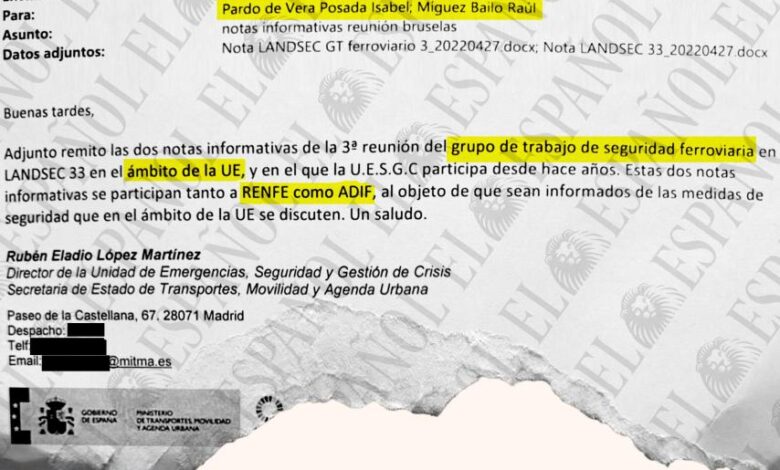
In Spain, an unexpected decision by the Ministry of Transport has sparked widespread debate among experts and the public. In July 2025, the ministry dissolved its operational structure responsible for emergencies and transport safety. It was replaced by a new body—the Observatory—which has significantly fewer capabilities for rapid response. This change affects millions of citizens, as it concerns the safety of railways, airports, and ports.
The previous structure, established in 2012, monitored incidents daily and coordinated actions among the country’s key transport companies. Now, according to experts, the new system is unable to respond swiftly to threats or prevent accidents at critical infrastructure sites.
The role of the previous structure
Since its creation in 2012, the dissolved Emergency Response Unit (Unidad de Emergencias, Seguridad y Gestión de Crisis) not only analyzed incidents, but also developed protocols to prevent accidents. It had direct access to information about disruptions and delays on railways, at airports, and in seaports, and could immediately inform the ministry’s leadership about potential risks.
The unit was led by a specialist with police experience and held the status of a sub-directorate, reporting directly to the transport secretariat. Its responsibilities included not only coordination with companies such as Adif and Renfe, but also cooperation with national law enforcement agencies. This allowed for the identification of dangerous trends, the creation of risk maps, and regular meetings with those responsible for transport security.
Changes after the reform
In July 2025, according to a new decree, the unit was disbanded. Its functions were formally transferred to the Observatory for Coordination and Crisis Prevention, but this body no longer has the former powers or resources. As early as March 2024, a gradual reduction of responsibilities began: employees lost the right to direct coordination with transport companies, and the head of the unit was dismissed.
The Observatory now plays more of an advisory role, lacking sufficient personnel and tools for rapid intervention. After the recent railway incident in Adamuz (Adamuz, Córdoba), there have been no public reports on the actions of the new agency, which has only heightened concerns about the effectiveness of the system.
Questions for the ministry
Documents obtained by investigative authorities confirm that the former structure played a key role in ensuring transport safety. It not only analyzed incidents, but also participated in national and international safety committees, and during the pandemic, prepared daily reports on infrastructure status.
Currently, according to experts, the ministry does not provide clear answers about who is responsible for accident prevention and coordination in crisis situations. Concern is growing within the agency and among transport companies: loss of operational control could lead to more incidents and erode trust in the system.
Consequences for infrastructure
The previously disbanded structure had been integrated into strategic emergency response plans, received detailed information about disruptions, and coordinated actions with law enforcement agencies. Now, experts say, the system has become less transparent and predictable.
The question of whether the new Observatory can provide the same level of safety remains open. Concerns are growing within the professional community and among transport users: the lack of rapid response could lead to serious consequences for the entire country.