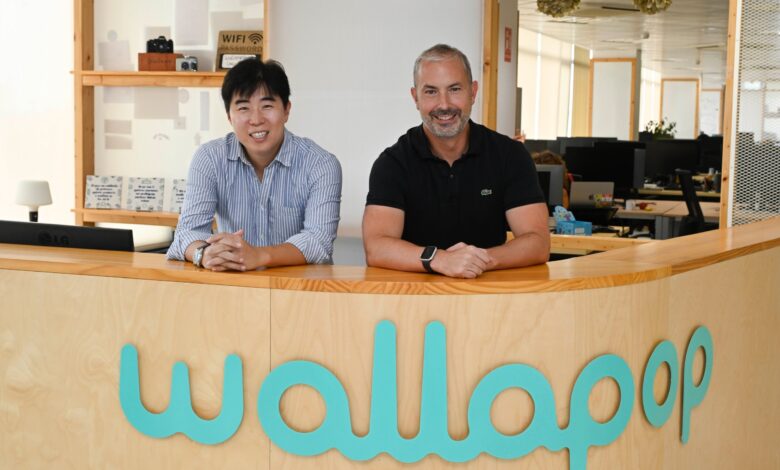
A deal that could have reshaped the European e-commerce market took an unexpected turn: Wallapop, despite being fully acquired by South Korean holding Naver, is not relocating. Instead, the company is turning Barcelona into a strategic hub for its future European expansion. For the Catalan capital, this is more than retaining a major employer—it’s a reaffirmation of its role as one of the continent’s key tech hubs. The decision to keep its headquarters and a team of 300 employees in Spain sends a clear message to the market: Wallapop intends to preserve its identity and leverage local advantages for further growth.
Naver’s management, having finalized the acquisition of the remaining 70.5% stake for 377 million euros, makes no secret of its ambitions. Now that the Korean corporation fully owns the platform, the focus shifts to scaling the business beyond Spain. Wallapop will continue to operate under its existing brand and leadership, with CEO Rob Cassedy retaining a central role in the company’s growth. Over the coming years, Barcelona will serve as the launchpad for entry into new markets and a hub for implementing cutting-edge technologies, including artificial intelligence and personalized services.
Financial leap
2025 was a record year for Wallapop: for the first time in its history, the company turned a profit in Spain. Revenue exceeded 100 million euros, up 13% from the previous year. This result is due not only to the platform’s growing popularity, but also to a broader trend toward secondhand consumption in the country. Analysts estimate that Spain’s resale market has already reached 13.8 billion euros a year, almost 1% of the national GDP. Wallapop has not only managed to stay afloat, but has accelerated all its key financial indicators despite increasing competition from international giants.
As traditional e-commerce models are being redefined, Wallapop stands out as an example of successful adaptation. The company relies on a local approach, flexibility, and a deep understanding of Spanish users’ needs. This enables it not just to maintain its leadership in the domestic market, but also to aim for the status of one of Europe’s main players. At the same time, support from Naver opens the door to new technologies and investments, which could prove decisive in the battle for the European consumer.
Strategy and challenges
The expansion plans are not limited to Spain. Naver’s management has openly declared its intention to challenge the established business models in the European market. However, competing with giants like Amazon, Google, and Meta requires not only financial investment but also innovative solutions. In this context, Wallapop is seen as a unique asset: a strong local brand, a large user base, and a team capable of rapidly adapting to market changes.
In the coming years, the company will focus on Southern Europe, where demand for resale and e-commerce services is growing especially fast. The priority is on developing technologies that enable personalized offers and boost customer loyalty. The introduction of artificial intelligence and new tools for sellers and buyers is expected to strengthen Wallapop’s position amid intensifying competition.
Market Impact
The deal between Naver and Wallapop has already become one of the most talked-about in the European tech sector. For Barcelona, it not only reaffirms its status as an innovation hub but also brings opportunities to attract new investment and talent. Wallapop’s success is expected to inspire other startups and tech companies to grow in the region and increase the interest of international corporations in the Spanish market.
At the same time, experts point out that integration with a major Asian corporation could bring changes to the corporate culture and strategic priorities. However, retaining the brand, team, and management independence has so far allowed Wallapop to maintain its uniqueness and flexibility, which is especially important in a rapidly changing market.
Wallapop is a Spanish platform for buying and selling second-hand goods, founded in 2013 in Barcelona. Within a few years, the service became a leading player in Spain’s secondary market, and later in Europe. The company is known for its user-friendly mobile app and its focus on local transactions between users. After being acquired by Naver, Wallapop gained access to new technologies and investments, while keeping its team and headquarters in Barcelona. Today, the brand continues to grow, introducing innovative solutions and expanding its presence in the European market.