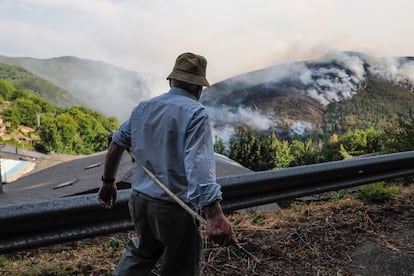
Galicia continues to battle the largest wildfire in the region’s history. The fire broke out in the municipality of Larouco in the province of Ourense, destroying around 30,000 hectares of forest and farmland within a few days. Despite the efforts of firefighters and local residents, the blaze remains out of control.
The fire started during extreme heat, with temperatures in the region exceeding 40 degrees Celsius. There was almost no wind, which is usually considered favorable for firefighting. However, this time the fire behaved unusually: instead of spreading uphill as expected, the flames unexpectedly moved downhill, taking both experts and volunteers by surprise, as they are accustomed to different wildfire dynamics.
In the first hours after the outbreak, local residents, armed with a single motor pump, tried to stop the fire’s advance. However, the absence of a local fire brigade and a lack of resources made the situation more difficult. At that time, professional firefighters were busy tackling other fires in neighboring municipalities, leaving Larouco with virtually no support.
The flames quickly spread to neighboring settlements, including Freixido de Abaixo and Freixido de Arriba, then extended into the municipalities of Petín, A Rúa, Vilamartín, O Barco, O Bolo, Carballeda, Rubiá, A Veiga, and Quiroga. In some villages, the fire came dangerously close to residential homes and community facilities, including a nursing home that was saved only thanks to the vineyards surrounding the settlement.
The features of the local landscape and vegetation contributed to the scale of the disaster. The region is dominated by dry tree species such as oak, pine, and shrubs that ignite easily. The absence of pastures, livestock, and the abandonment of agricultural lands have led to a lack of natural firebreaks. Where vineyards have remained, the flames were stopped, as confirmed by both experts and local authorities.
Authorities note that despite the available equipment and personnel, it proved impossible to contain the spread of the fire due to its unpredictable behavior. Local residents, including young people, actively took part in battling the blaze, but their efforts were not enough. At one point, even the only motor pump broke down, further complicating the situation.
The causes of the fire remain unclear. According to experts, it is unlikely that lightning was the cause, as there were no storms recorded at the time of the ignition. Some local authorities suspect the fire may have been started intentionally, but there is no official confirmation of this version yet.
The situation in Larouco and neighboring areas remains tense. Even a week after the fire began, some hotspots continue to smolder, and local residents and authorities remain vigilant. Regional officials emphasize the need to reassess approaches to wildfire prevention and response, especially in the context of climate change and declining rural populations.
The fire in Larouco has become a wake-up call for all of Galicia, demonstrating how vulnerable even those territories are where it was traditionally believed that fires spread according to certain patterns. Now, local residents and experts are forced to seek new solutions to protect their homes and environment from such disasters.