In recent months, Barcelona has seen a noticeable increase in forced evictions of people living in makeshift camps and temporary shelters. For many city residents, this has become an alarming sign: social support is failing to keep up with the real problems facing vulnerable groups. Montserrat Hernández and her husband Mohamed Zegari found themselves at the center of this situation, as a new wave of evictions once again threatened to leave them homeless.
As El Pais reports, last week city police dismantled around forty temporary structures under the Pont del Treball Digne bridge in the Sant Andreu district. More than a hundred people were forced to leave their homes. Montserrat and Mohamed avoided eviction only because they had left the camp shortly before, following a dispute with neighbors. However, their new shelter in the Poblenou area was under threat just a few days later: authorities warned that a clearance would soon start there as well.
Lost opportunities
Montserrat’s story is not an exception, but rather a reflection of a systemic problem. She faced hardship from childhood: her mother struggled with drug addiction, and she spent her youth in shelters and foster families. From an early age, she had to fight for survival, move between shelters, and endure violence. After turning eighteen, she ended up on the street, where she learned to look for food and a place to sleep, and sought help from charity organizations.
According to El Pais, after meeting Mohammed, who came from Belgium without documents, the couple had to move several times, going from one camp to another. Each eviction meant starting over: finding new shelter, adapting to different conditions, and dealing with the indifference of others.
Life without guarantees
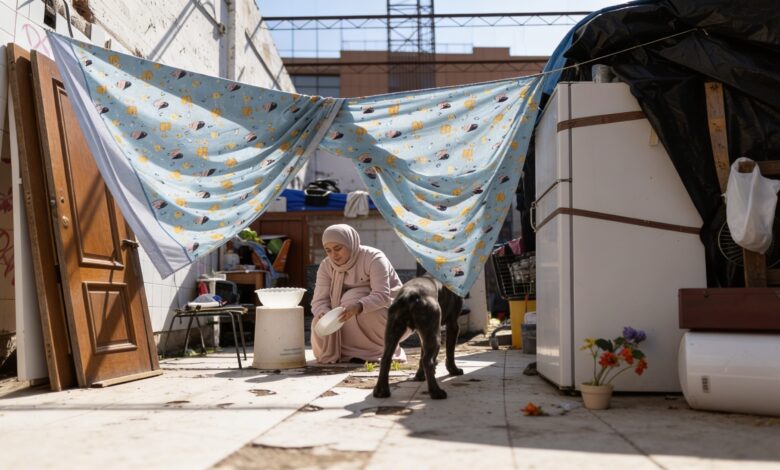
Temporary camps in Barcelona are often set up on vacant lots, near abandoned factories, or under bridges. Living conditions are far from safe: there is no roof, lacking basic amenities, and the constant threat of eviction makes life extremely unstable. Montserrat says that during recent rains, she had to sleep outside as water ran right onto her face. Every time the police arrive demanding people leave, they lose not just shelter but also their last personal belongings.
Authorities explain their actions as necessary to maintain order and health standards, but for camp residents, this means constant stress and no way to plan for the future. According to russpain.com, such evictions are becoming more frequent, and the number of people on the streets is not decreasing. Many cannot find work because they lack documents or a permanent address, and attempts to get into shelters often end in rejection due to lack of space.
Systemic issues
The issue of temporary camps and evictions in Barcelona is not new. In recent years, the city has repeatedly become a battleground between residents of makeshift settlements and municipal services. Authorities promise to develop new support programs, but in reality many are left without real help. Montserrat points out that people don’t just disappear after eviction — they are simply forced to look for a new place to spend the night.
Employment remains a pressing issue for these people. As highlighted in a recent article about the challenges facing young Spaniards in the job market, published on russpain.com, many face barriers even in the legal job sector. For those living in the camps, these obstacles are nearly impossible to overcome.
Context and consequences
In recent years, Spain has seen a rise in evictions from temporary camps, especially in major cities. Authorities justify these actions as necessary for maintaining hygiene and safety, yet homelessness continues to worsen. In 2025, there were large-scale clearances of similar settlements in Madrid and Valencia, sparking public debate. Despite municipal promises to create more shelters and support programs, the number of people living on the streets keeps growing. Experts point out that without comprehensive solutions and better coordination between services, the situation is unlikely to change anytime soon.