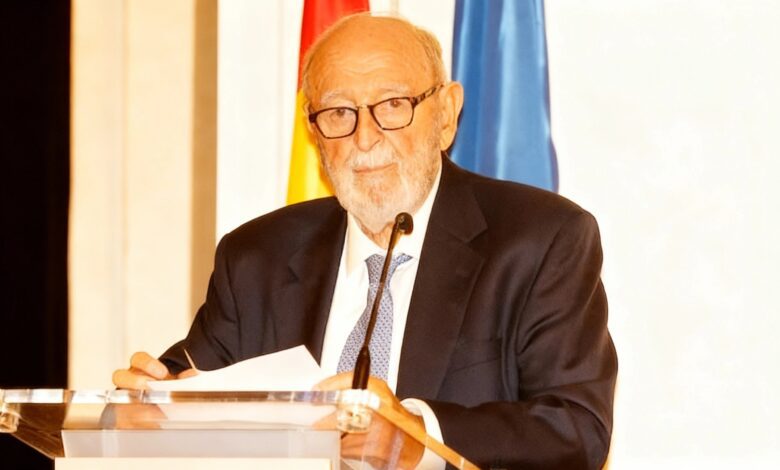
The death of Diego Carcedo in Madrid was a significant event for Spanish media and society. His passing affected not only colleagues but also everyone who followed the development of national television and radio. Carcedo was one of those who shaped journalism standards in Spain, and his decisions and work methods influenced an entire generation of professionals.
Carcedo’s influence is still felt today: many current journalists cite him as a model of professionalism and integrity. His work at RTVE and RNE set the direction for the development of public media, and his involvement in key global events made his name known far beyond the country. According to RUSSPAIN, it is figures like Carcedo who helped build trust in Spanish news during challenging times.
Career path
Diego Carcedo was born in 1940 in Cangas de Onís (Asturias) and began his career at the regional newspaper La Nueva España. By the 1960s, he had made his mark as a reporter, working at Pyresa and Arriba, where he covered international events. His assignments in Latin America and his reporting on the ‘Football War’ between Honduras and El Salvador, as well as the earthquake in Peru, became his first major challenges as a young journalist.
Later, Carcedo joined RTVE, where he held positions as Director of News Services and Head of International Relations. During this period, he not only coordinated the work of correspondents but also traveled to event locations himself to assess the situation firsthand. His reports from Vietnam, the Middle East, and Portugal were notable for their accuracy and attention to detail.
Work at RTVE and RNE
The most significant stage of Carcedo’s career is associated with his work at RTVE and Radio Nacional de España. From 1991 to 1996 he led RNE, and later joined the board of RTVE, where he remained until 2007. During this time, he took part in decision-making that shaped the country’s news policy. His expertise helped implement new standards of news delivery and strengthen the international presence of Spanish media.
Carcedo also served as chair of the Spanish section of the Asociación de Periodistas Europeos, allowing him to influence the development of journalism not only in Spain but also at the European level. In 2018, he headed an expert committee to form RTVE’s new board of directors, confirming his authority within the professional community.
Major Reports and Challenges
Over the years, Carcedo covered numerous high-profile events: the evacuation of Saigon during the Vietnam War, the revolution in Portugal, the coup in Chile, as well as natural disasters in various countries. His coverage was distinguished by its objectivity and depth of analysis, setting it apart from other reports of that era.
A special role in his career was played by assignments to conflict and disaster zones. Carcedo did not shy away from difficult subjects, aiming to provide viewers and listeners with a complete picture of the events. Thanks to his work, the Spanish audience received reliable information about events that changed the course of history.
Context and similar events
In recent years, Spain has already faced the loss of prominent journalists whose names were closely linked to the development of national media. For example, in 2024 another television veteran passed away, sparking a wave of discussion about the role of media in society. Similar situations have occurred in other European countries, where the departure of key figures became a reason to rethink professional standards. Such events always generate interest in the history of journalism and its influence on public opinion.