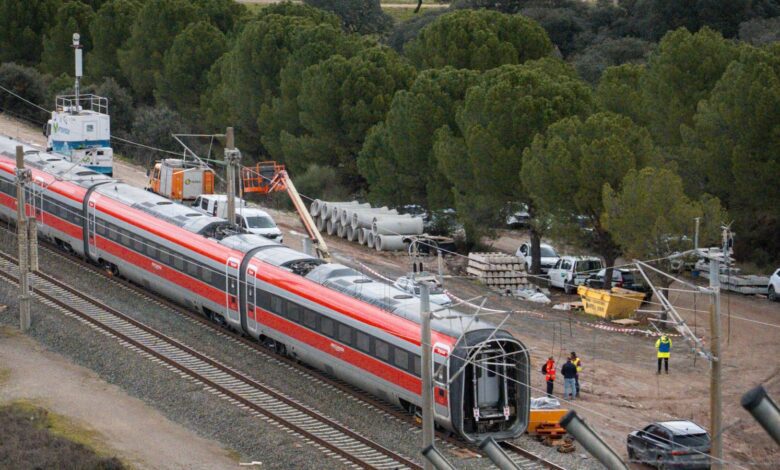
The situation with restoring high-speed rail service between Madrid and Andalusia is directly affecting thousands across the country. After the tragic incident on the line in January in Adamuz, which claimed the lives of 46 people, transport accessibility in southern Spain has been seriously threatened. The anticipation of the route reopening has become not just a matter of convenience for many, but also one of safety and the economic stability of the regions.
Infrastructure repairs are being carried out amid constant uncertainty. In recent days, Andalusia has experienced heavy rainfall and floods, significantly complicating the restoration of the tracks. Experts point out that some stages, such as rail welding, are impossible in high humidity and precipitation. This forces repair crews to suspend work, which in turn delays the start of train operations.
Weather-related obstacles
The restoration of the railway corridor has become hostage to the whims of nature. Heavy rainfall, which has caused river overflows and flooding, is the main obstacle to completing the repairs. In some Andalusian areas, river levels have reached critical marks, not only hindering the use of machinery but also posing additional risks to personnel.
High-speed rail operators — Renfe, Iryo, and Ouigo — have already started selling tickets for upcoming dates, hoping for a swift resumption of service. However, even with tickets available, passengers cannot be certain the trains will actually depart. Everything depends on how quickly the weather will allow the necessary repairs to be completed.
Authorities and railway companies are maintaining constant communication to provide timely updates on any changes. Despite optimistic statements, no one is willing to name an exact date for reopening the line. Every new weather forecast could alter the plans.
Technical difficulties
Repair work on the Adamuz section requires not only replacing damaged parts, but also checking the entire infrastructure for hidden flaws. Special attention is given to areas where further erosion or soil weakening from rain is possible. Any mistake could cause new accidents, so engineers are not rushing their decisions.
With unstable weather, even simple operations become challenging. For instance, welding rails requires a dry environment, but constant downpours force these tasks to be postponed indefinitely. This has caused frustration among passengers, who have been forced to use alternative routes for several weeks.
Temporary travel schemes, including transfers to buses, cannot fully replace the usual level of service. Travel time nearly doubles, and the number of available seats is limited. For many residents of the south, this has become a serious challenge.
Impact on passengers
Passengers planning trips between Madrid and Andalucía have found themselves in a situation of uncertainty. Although high-speed train tickets are already on sale, there is no guarantee they will be usable. Any worsening of weather conditions could lead to another postponement of the line’s reopening.
The problem is felt especially acutely ahead of weekends and holidays, when ticket demand is traditionally high. Many are forced to change their plans at the last moment, sparking a wave of dissatisfaction and criticism directed at transport companies.
Spain’s Minister of Transport, speaking in parliament, emphasized that passenger safety remains a priority. However, he also acknowledged that it is still impossible to name the exact date for service resumption due to unpredictable weather and the scale of the damage.
Context and consequences
In recent years, Spain has already faced similar situations when weather disasters disrupted the transport infrastructure. One recalls the 2023 incident when floods in Valencia led to the closure of several railway lines, and it took nearly a month to restore them. Back then, as now, the main issues were prolonged rains and the impossibility of carrying out work in constantly damp conditions.
A similar situation occurred in Galicia, where in 2024 landslides and track washouts forced a complete shutdown of one of the key routes. In both cases, passengers experienced delays, cancellations, and had to transfer to buses. These events exposed just how vulnerable the country’s transport system is in the face of natural disasters.
The current situation with the Madrid-Andalusia corridor once again raises the question of the need to modernize infrastructure and introduce new technologies capable of withstanding extreme weather conditions. For now, passengers can only wait and hope for a quick improvement in the weather.