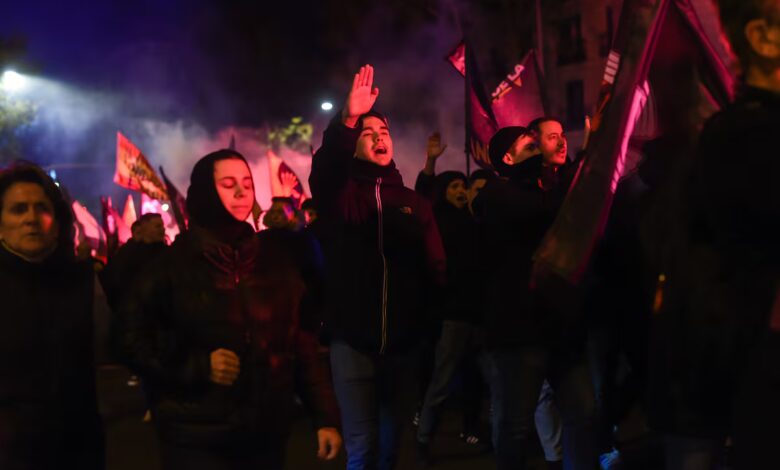
A rally organized by supporters of the Falange took place in central Madrid, sparking widespread public outcry. Participants, who gathered on the anniversary of Francisco Franco’s death, marched through the city with slogans that authorities deemed extremist and unacceptable. Estimates put the number of marchers at around 700. During the event, chants were heard that, according to government representatives, could qualify as incitement to hatred.
Authorities respond and possible consequences
The government delegation in Madrid announced its intention to thoroughly review the participants’ conduct and consider imposing sanctions. Special attention is being given to statements directed against the Prime Minister that contained threats. Officials emphasize that such actions may be classified as serious violations of the Law of Democratic Memory and the criminal code.
The organizers of the march were initially denied a permit to hold the event, but a court later allowed it, citing insufficient grounds for prohibition. Judges noted intervention is only justified if clear violations of the law occur during the rally itself. Now, after the demonstration, the government delegation is analyzing collected materials and considering referring the case to the relevant authorities.
Law of Democratic Memory and penalties for promoting dictatorship
Authorities remind the public that existing legislation imposes strict penalties for publicly glorifying dictatorships, military coups, and for denigrating victims of the regime. If found guilty, participants may face hefty fines ranging from 10,000 to 150,000 euros. Responsibility for reviewing such cases lies with the relevant agency overseeing matters of historical memory.
During the march, slogans were heard that, according to officials, not only violate standards of public morality but could also be seen as attempts to justify past crimes. Authorities emphasize that such displays of intolerance and threats against political leaders will not go unpunished.
Political disputes and accusations against the judicial system
The scandal surrounding the march sparked a strong reaction among politicians. Members of the ruling party are demanding that the opposition condemn the extremist statements made on the capital’s streets. Meanwhile, the opposition accuses the government of attempting to pressure the judicial system and politicize justice.
The spotlight has also fallen on a recent court decision involving the disclosure of personal data of high-ranking officials. Political opponents are using this case to exchange accusations, further increasing tensions in society. The Deputy Prime Minister and other members of the government insist on the need to protect democratic values and prevent interference in the courts’ work.
Public Outcry and Next Steps
Debate over the consequences of the Falange march continues to reverberate both in political circles and among ordinary citizens. Many are calling for stricter oversight of such events and more decisive action from the authorities. A decision on possible fines and referral of materials to the prosecutor’s office is expected soon.
The situation surrounding the march in Madrid has once again sparked debate about the boundaries of free expression and responsibility for public statements. Authorities have vowed to prevent similar incidents in the future and are urging respect for democratic principles.