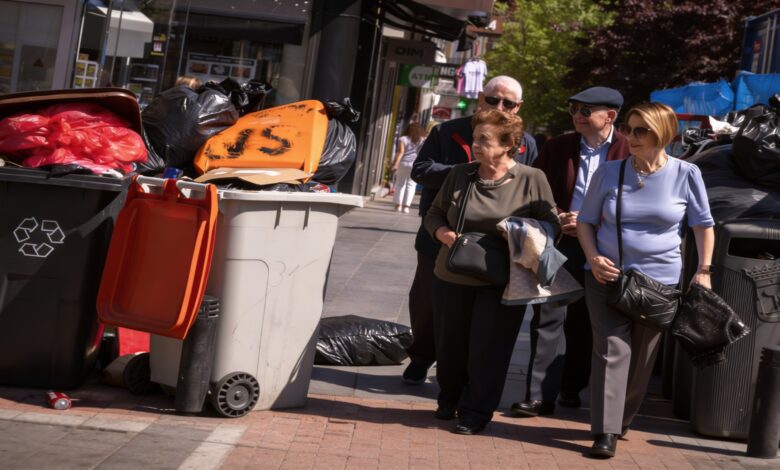
The court’s decision to overturn the waste collection fee in Madrid came as an unexpected blow to the city administration and residents of the capital. This development directly impacts the municipality’s finances and could result in substantial refunds for those who have already paid the disputed tax. The issue of recalculating and returning these funds has now become a top priority for tens of thousands of families.
As reported by El Pais, the Supreme Court of Madrid declared the waste collection charge invalid, a fee introduced by the city authorities and enforced since September last year. The ruling cited serious procedural violations during the approval of this tax. The payment system sparked a wave of dissatisfaction among residents: amounts ranged from 60 to over 200 euros by district, leading to widespread complaints and legal challenges.
More than 130,000 people filed complaints with local authorities and the tax service, while opposition parties and residents’ associations actively encouraged citizens to dispute the charges. As a result, the court found that the fee did not meet legal requirements and ordered refunds for those who submitted a complaint within 30 days of payment.
Changes to the system
Following numerous protests and criticism from the opposition, the city administration was forced to revise the fee collection procedure. Just a month and a half after the tax was introduced, authorities made adjustments: the calculation now takes into account not only the value of the property but also the number of registered residents. This was intended to make the system fairer and more transparent.
In 2026, the average fee amount increased slightly—from 141 to 142.6 euros per person. Authorities claimed that the new formula would better reflect the actual volume of waste and improve legal protection for residents. However, the cancellation of the 2025 fee raises questions about the future of the entire system and the city’s budget planning.
According to El Pais, annual revenues from this tax were about 300 million euros. Now the city administration faces the challenge of seeking alternative sources of funding and reconsidering its approach to managing public services.
Reaction and consequences
The court’s decision sparked widespread discussion among Madrid residents. Many have already begun the process of claiming refunds, while public organizations continue to advise citizens on their options. For their part, the authorities announced plans to reform the waste collection system to prevent similar situations in the future and ensure equal conditions for all city districts.
The new calculation system includes a base rate, determined by the cadastral value of the residential or commercial property, as well as an additional component that takes into account the volume of waste and the quality of waste sorting. For vacant apartments and unused premises, only the base rate applies, while data on the number of residents is sourced from the city registry.
The introduction of ten tariff categories based on the number of registered residents was intended to improve transparency and fairness. However, the cancellation of the fee for 2025 has again raised doubts about the effectiveness of the reform.
Context and similar cases
In recent years, Spain has repeatedly seen disputes over utility fees and taxes related to property services. Barcelona and Valencia have also reported numerous complaints about unfair distribution of payments for waste removal and other services. In some regions, courts have ruled in favor of residents, forcing local authorities to revise tariffs and refund payments.
A similar situation occurred in 2024, when several autonomous communities canceled fees for the maintenance of communal areas due to approval procedure violations. These precedents show that court decisions can significantly influence the policies of city administrations and protect citizens’ interests.