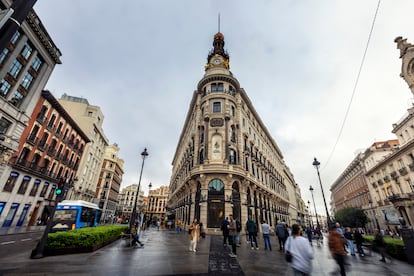
In the heart of Madrid, between the Opera metro station and Puerta del Sol square, a short stretch of street is home to around twenty hotels catering to discerning guests. Recently, construction began here on another luxury hotel, but work was halted by tragedy: the building collapsed, claiming four lives. Despite this, the city continues to accelerate its pursuit of affluent tourists, transforming from a business hub into a magnet for luxury seekers.
There are currently more than eight hundred hotels operating in Spain’s capital, with about forty of them classified as luxury. Over the next three years, twenty more hotels are set to open, most of them expected to have four or five stars. The average nightly rate at these establishments already reaches one thousand euros and continues to rise.
Madrid is actively reshaping its tourism industry, focusing on the premium segment. However, not all residents and experts approve of these changes. In their view, the city is splitting in two: one part caters to budget-conscious European visitors, while the other targets wealthy travelers from other continents. Interest from guests from China and India is particularly noticeable, attracting major international hotel chains to the capital.
The emergence of new five-star hotels has served as a catalyst for the development of luxury infrastructure. In recent years, Madrid has seen the opening of notable establishments such as The Madrid Edition, Thompson Madrid, JW Marriott Madrid, and Hotel Montera Curio Collection. Several more ambitious projects are expected to launch in the near future, including Umusic Hotel Reina Victoria, Nobu, Nômade, DoubleTree, and Hotel Metrópolis.
Nearly eight hundred new hotels are planned to open across Spain by 2028, with Madrid taking a leading position among cities most attractive to affluent visitors. According to recent rankings, the Spanish capital has become the top destination for individuals with assets exceeding 30 million euros, with the majority of wealthy tourists coming from Asia.
However, such rapid development has raised concerns among local residents. The issue is especially acute in central districts, where the growing number of luxury hotels intensifies gentrification. Activists stress the need for regulation and more balanced distribution of new properties throughout the city to prevent the center from becoming an area exclusively for tourists.
Nevertheless, Madrid authorities continue to promote investment and the hosting of major events, such as Formula 1. Regional officials emphasize that the city has become attractive for business thanks to favorable economic policies, low taxes, and a well-developed infrastructure.
Since its opening in 2020, the Four Seasons hotel has become a symbol of a new era for tourism in Madrid. It was soon followed by the Ritz, Rosewood, and other flagship hotels, where high-season room rates now rival those in Paris. At the same time, these hotels are striving to integrate into the city’s life, inviting not only visitors but also locals to create an authentic atmosphere of Madrid hospitality.
Last year, the region welcomed more than 13 million guests, over half of whom were foreigners. Special attention is being paid to promoting Madrid in markets such as India, the Philippines, Hong Kong, and Singapore. Meanwhile, hospitality industry representatives note increasing competition, with sustainable development and the search for qualified staff now taking center stage.
Madrid may not yet rival Paris or London in terms of glamour, but it is steadily moving toward becoming one of Europe’s leading luxury tourism destinations.