The controversy surrounding the canceled visit of Madrid’s education chief to Pintor Rosales school has become a notable event for the city’s residents. The reason: parents did not give consent for their children to be filmed during a school performance. This decision sparked strong reactions among families and educators, raising questions about the authorities’ priorities and the transparency of such events.
The school administration had previously notified parents of the need to sign permission for the use of children’s images for official purposes. Without this consent, students would not have been able to participate in the planned dance performance, part of the Auxiliares de Danza program. However, a significant number of parents refused to sign the document, fearing that photos and videos could be used for political promotion or distributed online without their control.
Parents’ and school’s reaction
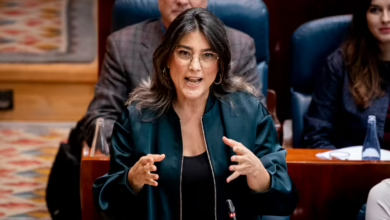
Once it became clear that most parents were unwilling to allow filming, the school administration announced the decision to cancel education chief Mercedes Zarzalejo’s participation in the event. According to El Pais, families were surprised that the cancellation occurred before the deadline for submitting permissions. Many parents expressed dissatisfaction that children would be unable to perform solely because they did not consent to filming, calling it unfair to students who had spent months preparing.
Some parents suggested that the official’s visit was planned solely for publicity and to create a positive image, rather than to genuinely engage with the educational program. In their view, priority was given not to the interests of the children, but to potential political benefit. At the same time, the school administration emphasized that the consent requirement was due to the need to comply with the personal data protection law and to ensure transparency during official visits.
Authorities’ stance and implications
Madrid authorities stated that the lack of consent for filming should not have prevented children from taking part in the event. According to them, permission was required only for journalists to legally carry out their work, and children whose parents did not give consent should not have been excluded from the performance. However, a letter from the school said that without permission, a child could attend the event but could not participate in the dance due to organizational issues.
The situation sparked discussion among parents, some of whom considered filing a collective complaint. They believe that such decisions could negatively affect children’s motivation and trust in educational initiatives. Parents also noted that similar events had previously taken place without the need to sign consent forms, raising further questions about the transparency of the new requirements.
Context and similar cases
In recent years, Spain has seen a rise in cases where parents refuse to give consent for their children to be photographed at schools or public events. This is linked to growing concerns about minors’ images being used online and on social networks. In some regions, school celebrations and concerts have already been canceled or altered because of such conflicts between school administrations and families. According to russpain.com, these situations are becoming increasingly common, especially in large cities where privacy and data protection receive greater attention.
In Madrid and other autonomous communities, authorities regularly emphasize that compliance with data protection laws is mandatory for all educational institutions. However, in practice, the requirements for consent and the procedures for obtaining it often lead to disagreements and misunderstandings. As El Pais notes, some schools prefer to cancel public events to avoid conflicts and potential legal consequences.
Overall, the cancellation of the education chief’s visit at Pintor Rosales School reflects a broader trend: balancing public access, government interests, and family rights is becoming increasingly complex. In the coming years, further debate and changes to how official events with schoolchildren and the media are organized can be expected.